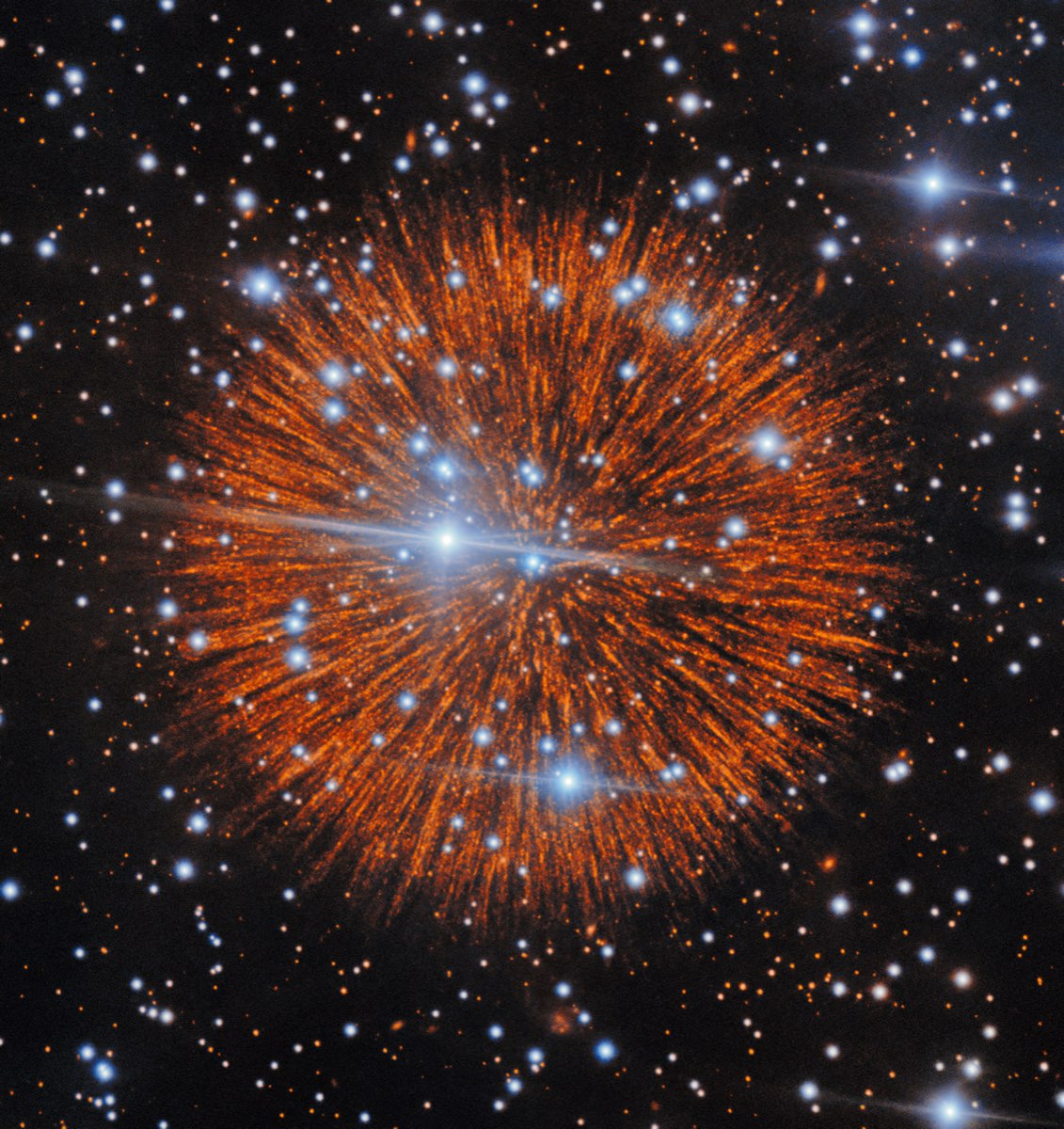
VLT Captures the Clearest Image Yet of Betelgeuse's Companion Star
SPHERE images of Betelgeuse B, taken in December 2024, suggest the long-suspected companion has two to three times the mass of the Sun.
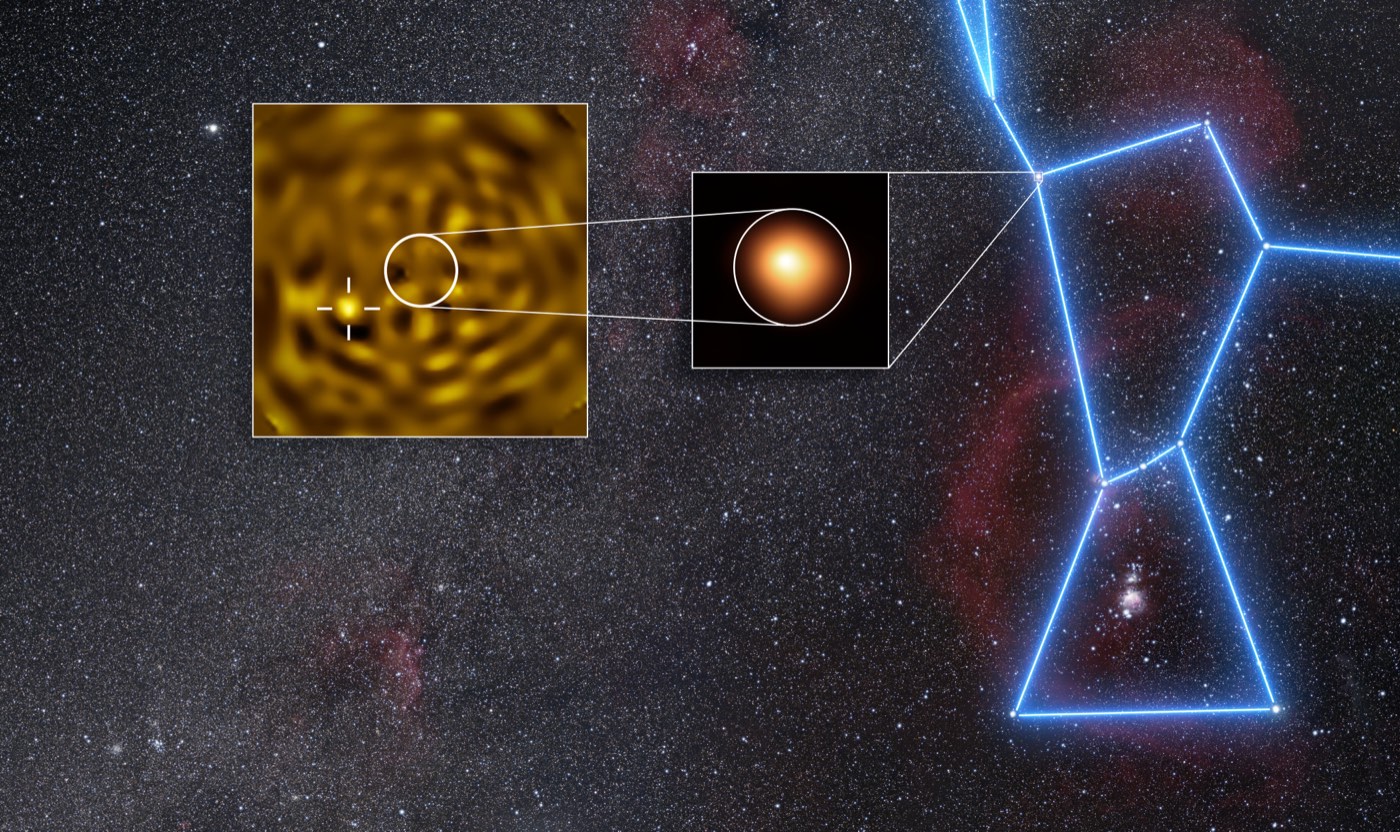
Astronomers have taken the clearest image yet of Betelgeuse B, the long-suspected companion of the red supergiant Betelgeuse. A team led by Miguel Montargès of the Observatoire de Paris - PSL used the SPHERE instrument on ESO’s Very Large Telescope, and ESO announced the result on July 28, 2026. The paper, “VLT/SPHERE images the candidate companion of Betelgeuse”, appears in Astronomy & Astrophysics.
A companion has been proposed for about a century to explain regular changes in Betelgeuse’s brightness. Studies published in 2024 predicted when it would sit at its widest separation from the giant star, and the team observed at that moment, in December 2024. SPHERE is built to block the glare of a bright star so that faint objects next to it can be seen.
The images suggest Betelgeuse B has about two to three times the mass of the Sun, more than the roughly one solar mass expected before. That matters for Betelgeuse’s future. It is a red supergiant expected to end its life as a supernova, and a heavier companion could influence how it evolves and dies. The team is careful about certainty: they say a further observation in about a year, with the companion on the other side of the star, is needed to confirm it. The paper’s own title calls it a candidate. More on how massive stars live and die in our guide to stars, and our video library includes a long explainer on Betelgeuse.
What to watch next: the follow-up observation in about a year, with the companion on the far side of Betelgeuse.
Primary source
This summary is based on ESO and the peer-reviewed paper. Read the original for full details, data and caveats.
This week in papers
The week's most important results, one line each, every week.