Gemini North Finds Chains of Knots in the Remnant of Supernova 1181
New Gemini North images show Pa 30, likely left by the supernova medieval astronomers saw in 1181, is threaded with chains of tiny knots.
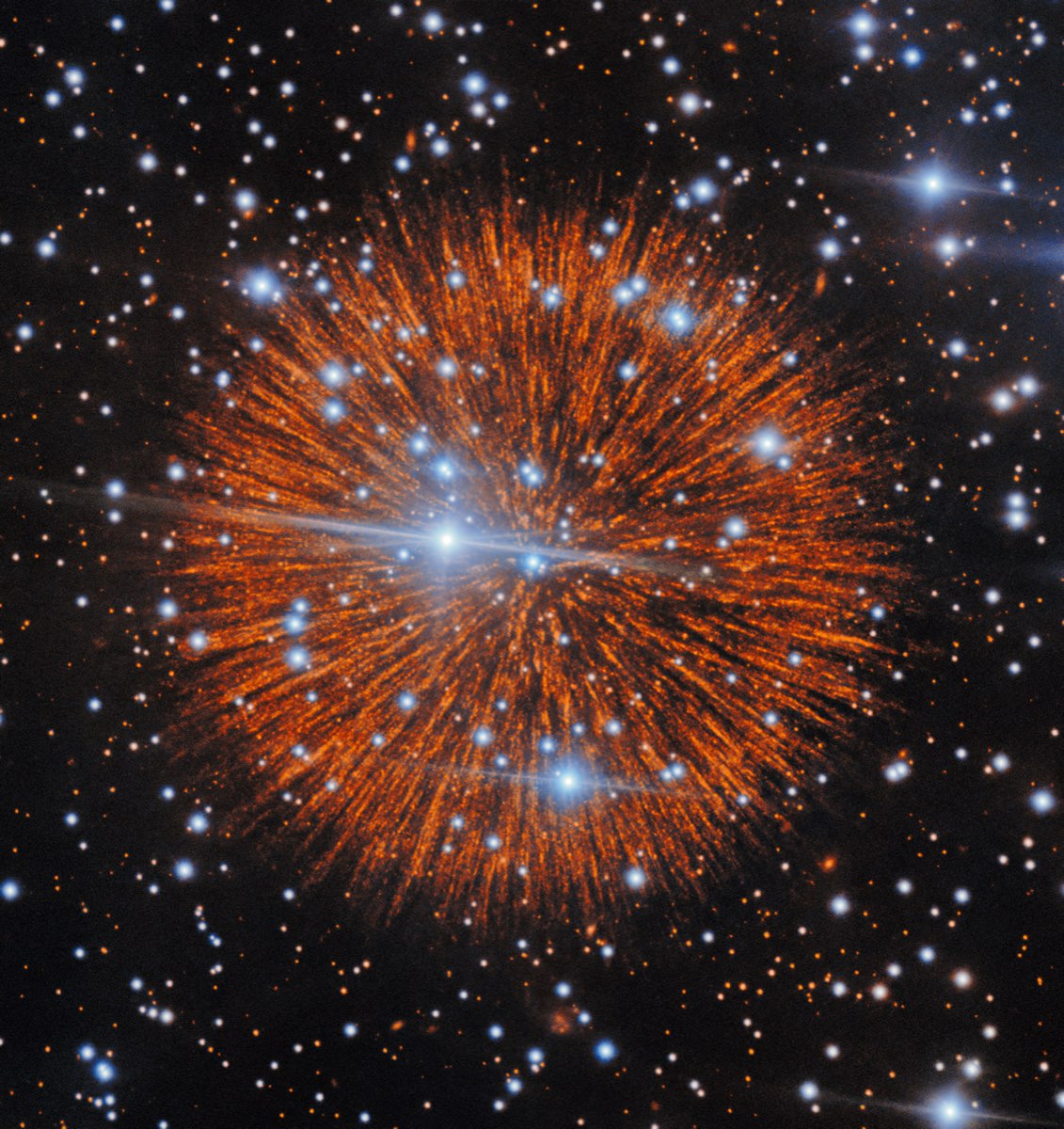
Pa 30, the likely remnant of a supernova that medieval astronomers watched in 1181, is laced with chains of tiny knots, according to new images from the Gemini North telescope. The study is published in The Astrophysical Journal, and NSF NOIRLab announced it on October 6, 2026.
The written record is unusually rich. Chinese, Japanese and Arabic astronomers logged SN 1181 starting between August 4 and 6, 1181, and it stayed visible in Cassiopeia for 185 days. It is one of only five supernovae in the Milky Way observed before the telescope was invented. The remnant itself was found much later, in 2013, by amateur astronomer Dana Patchick in data from NASA’s WISE satellite.
Using the GMOS instrument on Gemini North, the team found about ten times more filament structure than earlier images showed. The radial filaments turn out to be chains of small knots, not smooth streaks. At the center sits the star IRAS 00500+6713, at about 200,000 °C, driving winds of about 16,000 km/s. Its position almost exactly at the center fits a rare, incomplete explosion called a Type Iax supernova, which can leave its star behind instead of destroying it. Pa 30 is the only known Type Iax remnant in our galaxy.
The result ties a medieval eyewitness account to a physical object and gives a close-up view of a kind of explosion astronomers rarely get to study nearby. Supernovae were only recognized as their own class of event in 1934, by Baade and Zwicky. More in our guide to stars.
What to watch next: the knotted structure gives modelers a new detail to reproduce when simulating how this partial explosion unfolded.
Primary source
This summary is based on NSF NOIRLab and the peer-reviewed paper. Read the original for full details, data and caveats.
This week in papers
The week's most important results, one line each, every week.