
Stars
Webb Finds the Tiny Host Galaxy of the Most Distant Fast Radio Burst
Webb traced FRB 20240304B to a young dwarf galaxy 3 billion years after the Big Bang, evidence that some fast radio bursts come from magnetars.
Landmark papers, today's discoveries and the far future of the cosmos, explained plainly and always linked to the source.
Webb traced FRB 20240304B to a young dwarf galaxy 3 billion years after the Big Bang, evidence that some fast radio bursts come from magnetars.
Each one changed what we know. Read our plain-English summary, then the original. Read them in order.
1912
Leavitt and Pickering, Harvard College Observatory Circular
Found in 1912 that brighter Cepheid stars pulse more slowly. Henrietta Leavitt's law became the first standard candle for measuring cosmic distances.
Stars
1915
Einstein, Sitzungsberichte der Königlich Preussischen Akademie der Wissenschaften (Berlin)
Completed general relativity in 1915. Albert Einstein's four-page paper on the field equations of gravitation: what it says, how it was tested.
Cosmology
1916
Schwarzschild, Sitzungsberichte der Königlich Preussischen Akademie der Wissenschaften zu Berlin
Found in 1916 the first exact solution of Einstein's equations, with the radius now known as a black hole's horizon. Karl Schwarzschild's paper, explained.
Black holes
1925
Payne, Harvard Observatory Monographs No. 1 (PhD thesis, Radcliffe College)
Showed in 1925 that stars are mostly hydrogen and helium. Cecilia Payne's PhD thesis decoded stellar spectra and revealed what the universe is made of.
Stars
1927
Lemaître, Annales de la Société Scientifique de Bruxelles
Derived in 1927 that the universe is expanding and that galaxies recede in proportion to distance. Georges Lemaître's paper, two years before Hubble.
Cosmology
1929
Hubble, Proceedings of the National Academy of Sciences
Showed in 1929 that galaxies recede faster the farther away they are. Edwin Hubble's six-page paper, its numbers, the Lemaître credit, and the original.
Cosmology
1931
Chandrasekhar, The Astrophysical Journal
Showed in 1931 that white dwarfs have a maximum mass. Subrahmanyan Chandrasekhar's limit, now about 1.4 Suns, decides which dead stars collapse further.
Stars
1933
Zwicky, Helvetica Physica Acta
Found in 1933 that the Coma galaxy cluster needs far more mass than its stars show, and named it dark matter. Fritz Zwicky's paper, explained.
Dark matter
1939
Bethe, Physical Review
Explained in 1939 why stars shine: Hans Bethe worked out the fusion reactions, the proton-proton chain and the CNO cycle, that turn hydrogen into helium.
Stars
1953
Miller, Science
Showed in 1953 that sparks in methane, ammonia, hydrogen and water vapor make amino acids. Stanley Miller's flask experiment founded prebiotic chemistry.
Astrobiology
1957
Burbidge et al., Reviews of Modern Physics
Explained in 1957 how stars forge almost every element heavier than helium. Burbidge, Burbidge, Fowler and Hoyle set out eight nucleosynthesis processes.
Stars
1965
Penzias and Wilson, The Astrophysical Journal
Detected in 1965 a faint 3.5 K microwave glow from every direction. Penzias and Wilson's two-page paper found the afterglow of the Big Bang.
Cosmology
1968
Hewish et al., Nature
Reported in 1968 the first pulsar, a radio source ticking every 1.337 seconds. Found by Jocelyn Bell, it proved that neutron stars exist.
Stars
1970
Rubin and Jr., The Astrophysical Journal
Measured in 1970 that Andromeda's outer regions spin as fast as its inner ones, a sign of unseen mass. Vera Rubin and Kent Ford's rotation curve paper.
Dark matter
1974
Hawking, Nature
Showed in 1974 that black holes glow faintly and evaporate, ending in a burst. Stephen Hawking's two-page Nature letter on Hawking radiation, explained.
Black holes
1975
Hulse and Taylor, The Astrophysical Journal Letters
Discovered in 1974 a pulsar orbiting a neutron star every 7.75 hours, later the first evidence of gravitational waves. Hulse and Taylor's Nobel paper.
Gravitational waves
1980
Alvarez et al., Science
Found in 1980 a spike of iridium where the Cretaceous ends. Luis and Walter Alvarez proposed that a 10 km asteroid caused the extinction of the dinosaurs.
Solar System
1981
Guth, Physical Review D
Proposed in 1981 that the infant universe expanded exponentially for a brief moment. Alan Guth's inflation paper, its puzzles, its flaw and its tests.
Cosmology
1992
Smoot et al., The Astrophysical Journal
Detected in 1992 the first ripples in the cosmic microwave background, about 30 millionths of a degree. George Smoot's COBE result and why it won a Nobel.
Cosmology
1995
Mayor and Queloz, Nature
Found in 1995 the first planet orbiting a Sun-like star. Mayor and Queloz detected 51 Pegasi b, a hot Jupiter that circles its star every 4.23 days.
Exoplanets
1997
Adams and Laughlin, Reviews of Modern Physics
Mapped the universe's future into eras, from the age of stars to a dark era beyond 10100 years. Fred Adams and Gregory Laughlin's 1997 review, explained.
Future of the universe
1998
Riess et al., The Astronomical Journal
Showed in 1998 that cosmic expansion is speeding up. Adam Riess and the High-Z team used distant supernovae. What they found, and the original paper.
Dark energy
1999
Perlmutter et al., The Astrophysical Journal
Showed with 42 distant supernovae that the cosmological constant is positive and expansion is accelerating. Saul Perlmutter's Nobel paper, explained.
Dark energy
2016
LIGO Scientific Collaboration and Virgo Collaboration, Physical Review Letters
Detected gravitational waves for the first time, from two black holes merging 1.3 billion light-years away. The 2016 LIGO-Virgo GW150914 paper.
Gravitational waves
2017
LIGO Scientific Collaboration and Virgo Collaboration, Physical Review Letters
Detected in 2017 two neutron stars merging 40 megaparsecs away, also seen as a gamma-ray burst and a kilonova. The LIGO-Virgo GW170817 discovery paper.
Gravitational waves
2019
Event Horizon Telescope Collaboration, The Astrophysical Journal Letters
Captured in 2019 the first image of a black hole: a ring of light around the shadow of M87*, 6.5 billion Suns. The Event Horizon Telescope's paper.
Black holes
2020
Planck Collaboration, Astronomy & Astrophysics
Measured the universe's age at 13.787 billion years and its expansion rate at 67.4 km/s/Mpc. The Planck Collaboration's final 2018 parameters, explained.
Cosmology
Deep time
Stars will keep forming for about 1014 years. Measured against that, our 13.8 billion years is a newborn's first week. Beyond the stars, the timeline runs past 10100 years.
24,111
astrophysics papers posted to arXiv in the last twelve months.
Fastest growing: Instruments and methods, +30.9% on the previous year.
Open Research Pulse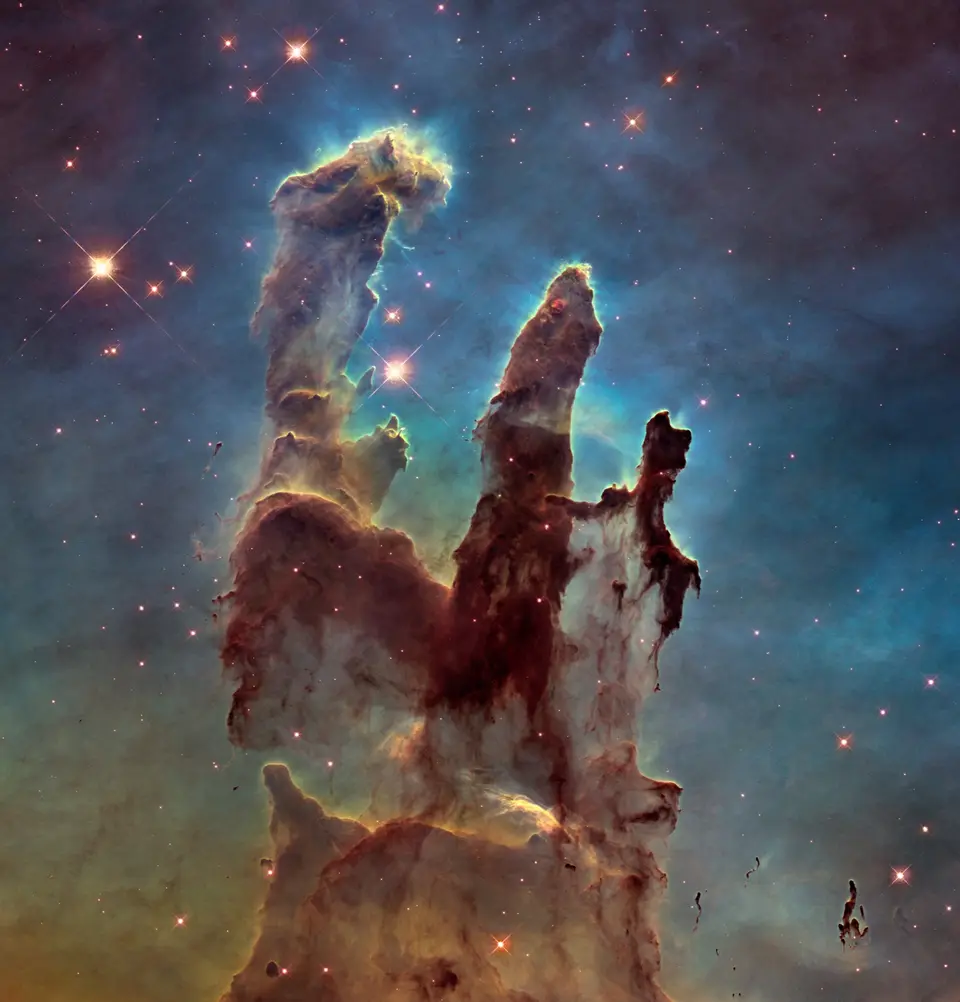
The birth, life and death of stars, the engines of the Stelliferous Era.
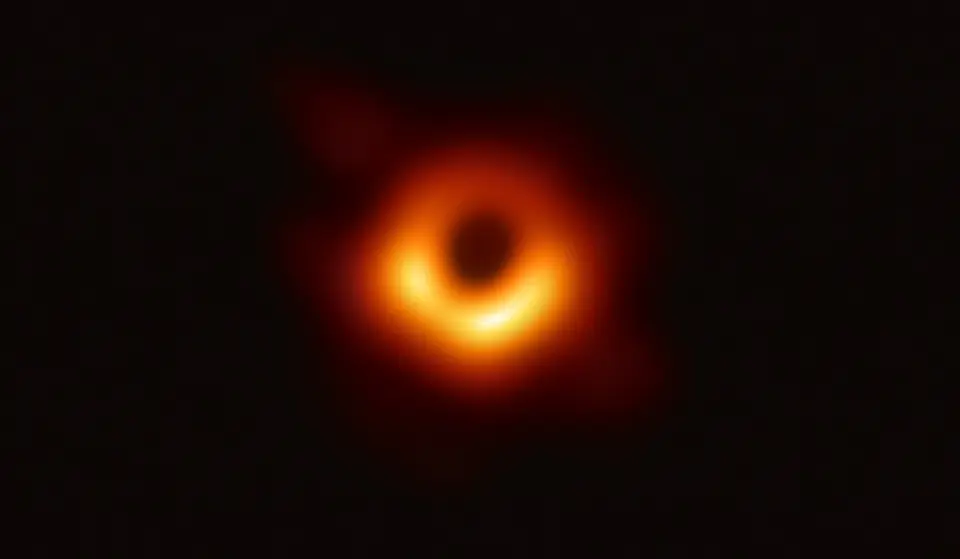
Regions where gravity wins completely, from stellar remnants to galactic giants.
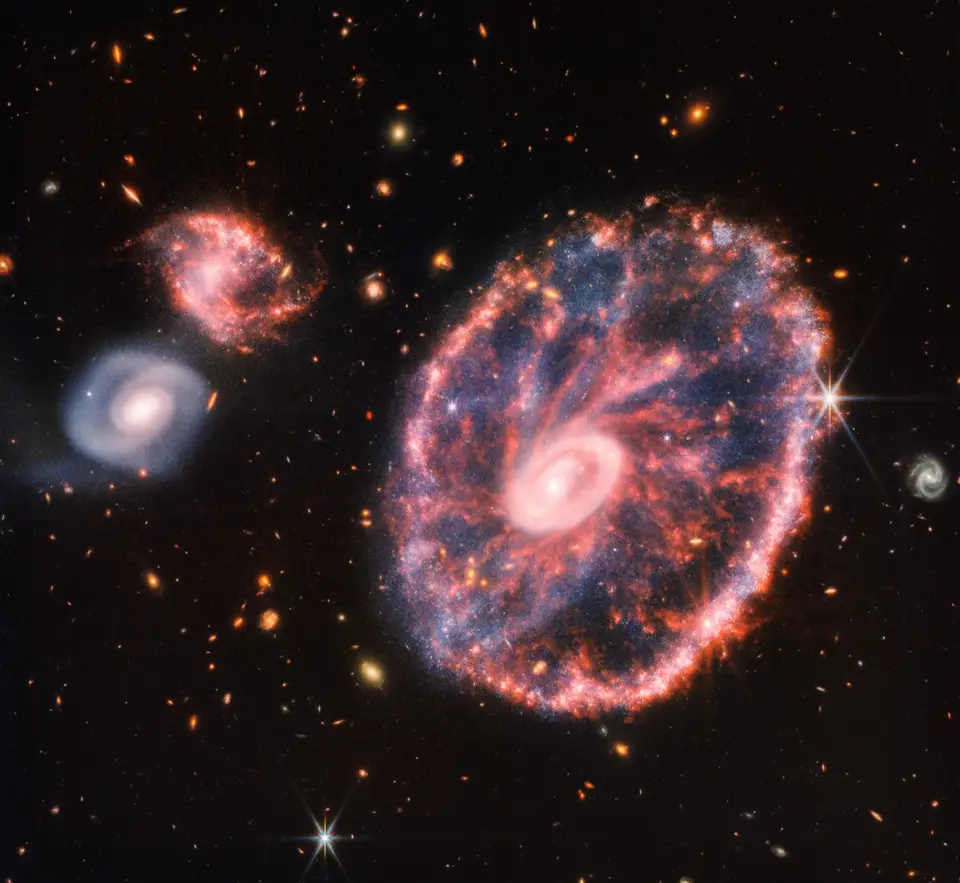
How galaxies form, collide, grow and die.

The origin, shape and expansion of the universe as a whole.
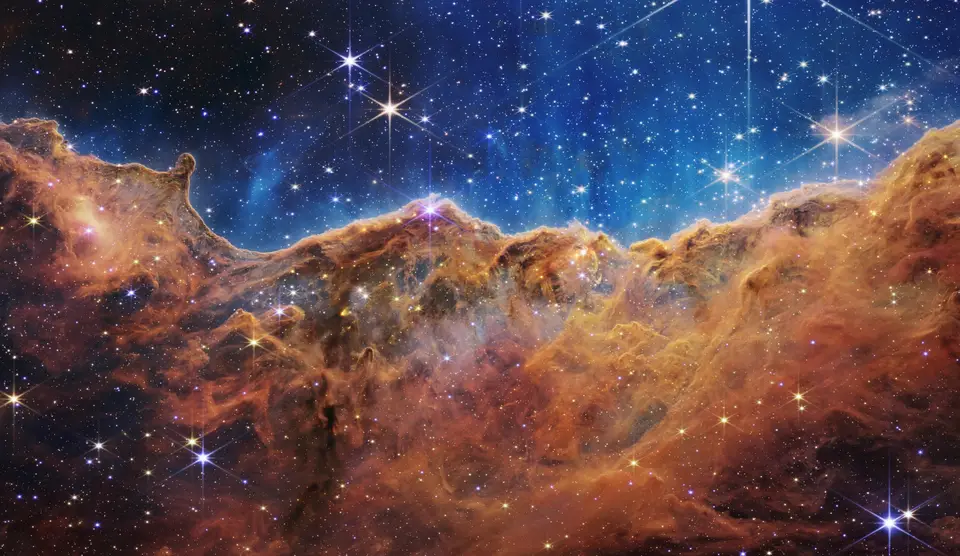
The instruments that turn photons into knowledge.
Hand-picked videos from scientists and the best explainers, each with our short summary.
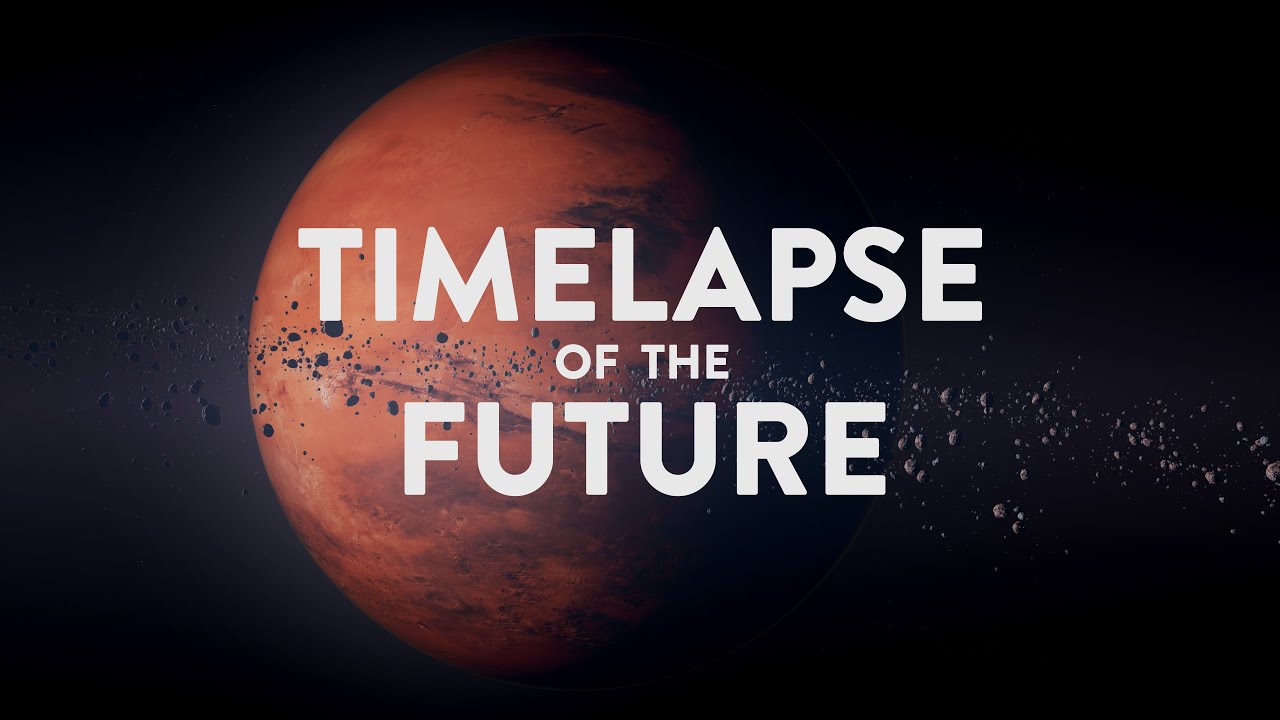
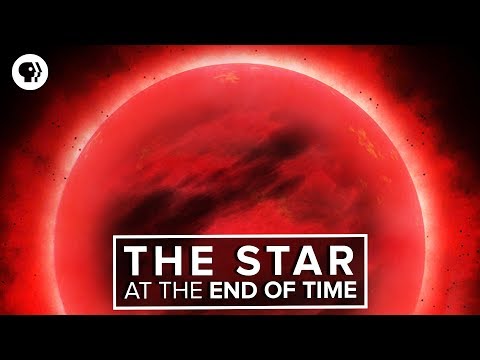
A cinematic timelapse of the future of the universe, jumping forward in ever larger steps from the present to the death of the Sun, the end of all stars and beyond. Pure visuals and music, no prior knowledge needed. melodysheep
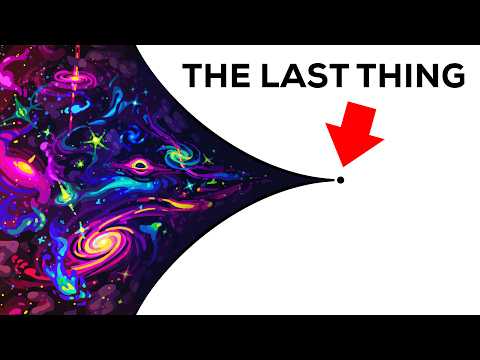
Future of the universe

Future of the universe
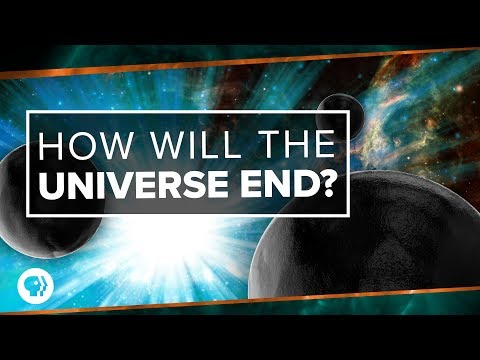
Future of the universe
Future of the universe
Newsletter
Five new results in one line each, plus one landmark from the archive. One short email a week, no ads.
New here? Start with the 27 papers that built modern astronomy