Lopsided Mass Loss as the Sun Dies Could Wreck the Outer Solar System
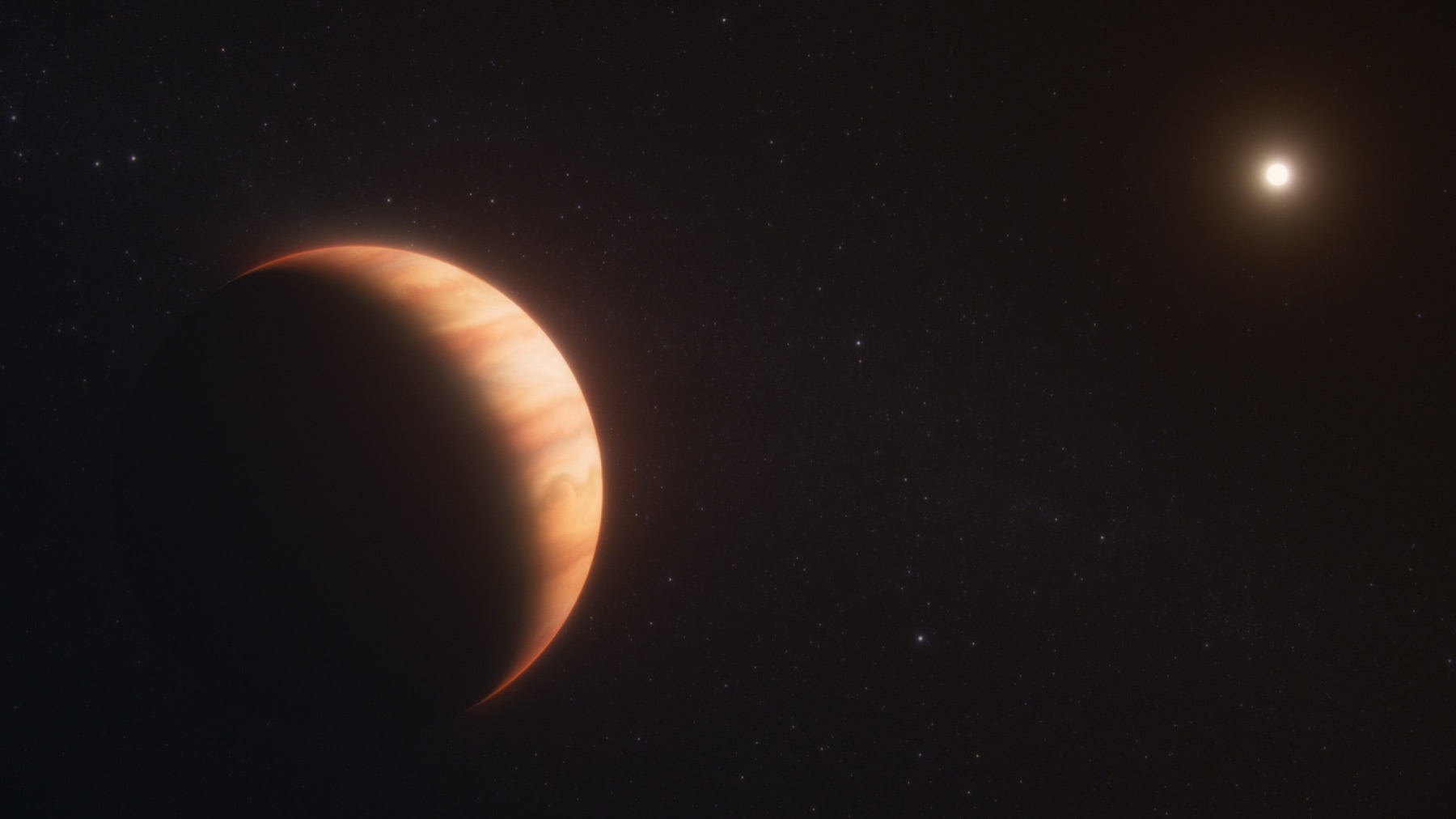
Simulations by Batygin, Fuller and Adams suggest uneven mass loss could scatter the giant planets a billion years after the Sun becomes a white dwarf.
The outer Solar System may fall apart far sooner than thought once the Sun dies, according to a study by Konstantin Batygin, Jim Fuller of Caltech and Fred C. Adams. The paper, posted to arXiv on September 11, 2026, has been accepted for publication in The Astrophysical Journal Letters. Its conclusion: the giant planets’ expected survival time shrinks by a factor of about a billion.
Earlier work put the outer Solar System’s intrinsic lifetime at about 1018 years, or about 100 billion years once solar mass loss and passing stars are included. Those estimates assumed the Sun sheds its outer layers smoothly as it dies. Measurements of white dwarfs moving with small recoils suggest otherwise: dying stars appear to throw off mass in lumpy, uneven bursts that nudge the star itself. When the team added those kicks to simulations, about 40% of runs saw the giant planets disrupted or violently scattered before the white dwarf had even formed, and about 90% fell apart within 3 billion years. The outer system’s lifetime drops to roughly a billion years after the Sun becomes a white dwarf. For the inner planets, Mercury has about a 1% chance of going unstable before the Sun leaves its long hydrogen-burning phase.
This rewrites part of the far-future timeline of our own neighborhood. It extends Laskar’s 1989 finding that the Solar System is chaotic and adds to models of the red giant Sun swallowing Earth. Adams co-wrote the 1997 review “A Dying Universe” that named the eras of deep time. The results depend on how strong the assumed kicks are, so better white dwarf measurements will sharpen them.
What to watch next: more precise recoil measurements for white dwarfs, which set how violent the Sun’s final mass loss is likely to be.
Primary source
This summary is based on arXiv (Batygin, Fuller and Adams) and the peer-reviewed paper. Read the original for full details, data and caveats.
This week in papers
The week's most important results, one line each, every week.