Interstellar Comet 3I/ATLAS Likely Formed Around a Very Old Star
Carbon and nitrogen isotopes measured with ESO's VLT suggest 3I/ATLAS formed in an old, metal-poor star system, possibly more than twice the Sun's age.
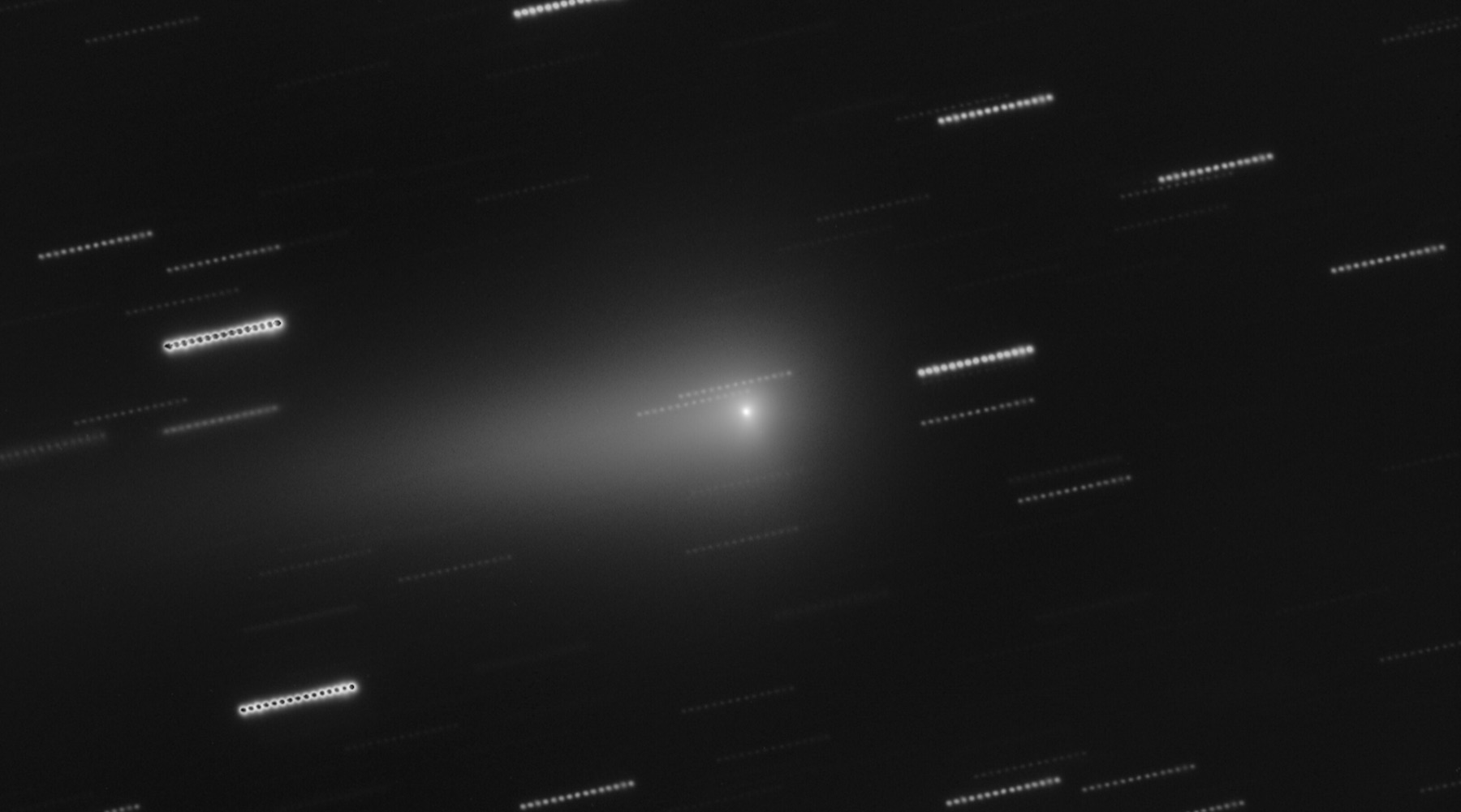
3I/ATLAS, the third interstellar object ever found, likely formed around a star much older than the Sun. A team led by Cyrielle Opitom, Jean Manfroid and Damien Hutsemékers published the result in Nature Astronomy, and ESO announced it on July 6, 2026.
Interstellar objects come from other star systems and pass through ours only once. 3I/ATLAS follows 1I/’Oumuamua, discovered in 2017, and 2I/Borisov, and it is the brightest of the three. Using the UVES spectrograph on ESO’s Very Large Telescope, the team measured carbon and nitrogen isotope ratios in the comet’s cyanide gas. Isotopes are versions of an element with different numbers of neutrons, and their ratios act as a chemical birth certificate. This is the first such measurement for a comet formed outside the Solar System.
The comet carries unusually high carbon and nitrogen isotope ratios compared with Solar System comets. That points to formation in the outer regions of an old star system poor in heavy elements. Evidence from several teams, including a JWST study in Nature that also found elevated deuterium (heavy hydrogen), points to the comet being more than twice as old as the Sun.
Interstellar comets are physical samples of other planetary systems, delivered to our doorstep, and this one may preserve chemistry from before the Sun existed. The age is an inference from chemistry, not a direct measurement, which is why the teams say “likely”. More in our Solar System guide and our exoplanets guide.
What to watch next: further analyses of 3I/ATLAS data from other telescopes should test whether its chemistry points to the same old origin.
Primary source
This summary is based on ESO and the peer-reviewed paper. Read the original for full details, data and caveats.
This week in papers
The week's most important results, one line each, every week.