Hubble Reveals the Milky Way's Earliest Merger, 11.8 Billion Years Ago
Globular clusters reveal LKH, a dwarf galaxy that merged with the Milky Way 11.8 billion years ago, the earliest merger known in our galaxy.
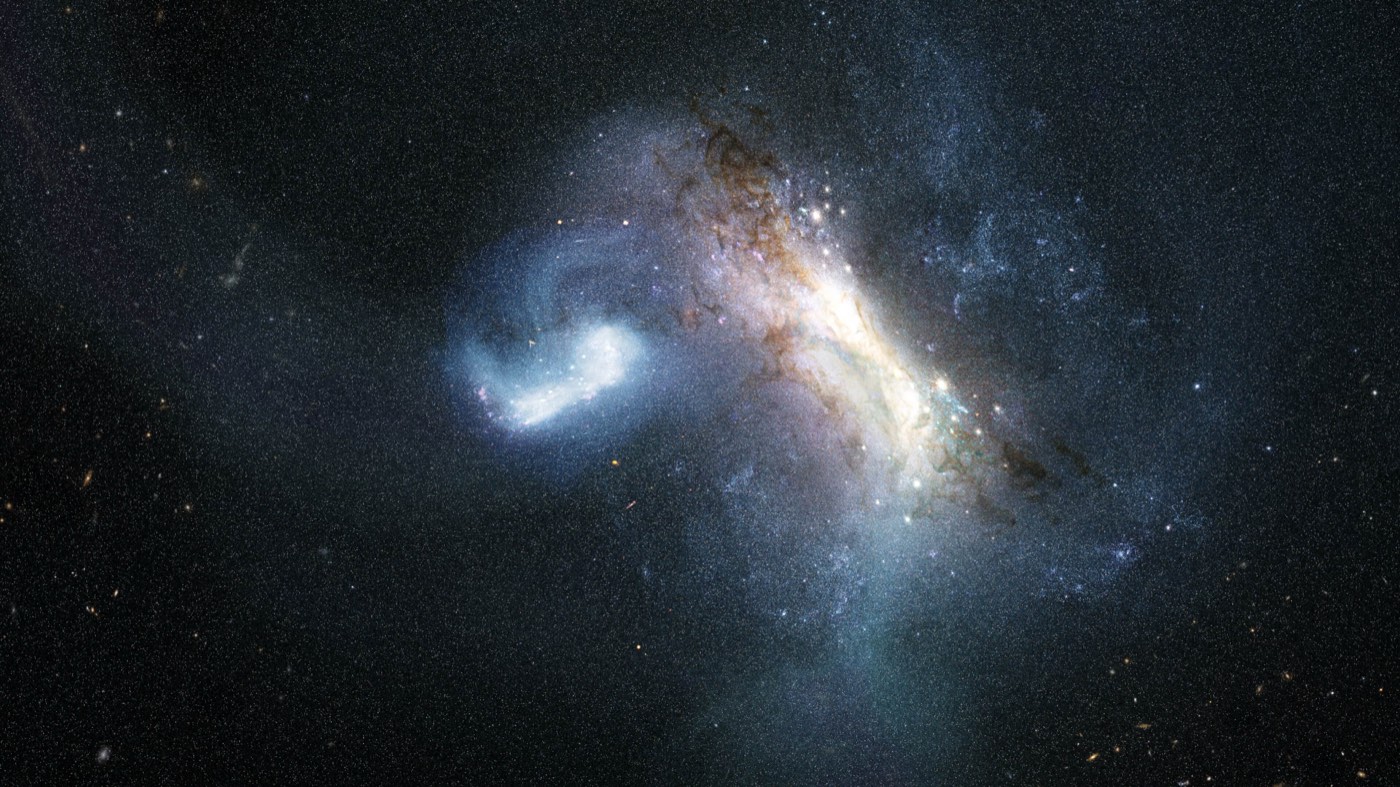
The Milky Way swallowed a dwarf galaxy, now named LKH, about 11.8 billion years ago, just 2 billion years after the Big Bang. It is the earliest merger known in our galaxy’s history. The study, led by Davide Massari of INAF Bologna, was published in Nature Astronomy, and ESA/Hubble announced it on August 17, 2026.
The evidence comes from Hubble studies of globular clusters, dense, ancient balls of hundreds of thousands of stars that orbit the Milky Way. Some of these clusters were born in other galaxies and kept the record of where they came from after their home was absorbed. A group of them traces LKH. The dwarf held roughly 500 million solar masses in stars, a significant share of the young Milky Way’s mass at the time.
The result extends our knowledge of the Milky Way’s history 1.8 billion years farther back than before. The previously known milestones were the Gaia-Sausage-Enceladus merger about 10 billion years ago, identified from Gaia data in 2018, and the ongoing merger with the Sagittarius dwarf galaxy, which began more than 6 billion years ago. LKH fills in the murkiest chapter, when the galaxy was still being assembled from smaller pieces, as the bottom-up model of galaxy growth predicts. Reconstructing events this old relies on modeling how clusters’ ages and orbits survive billions of years, so details may shift as more clusters are measured. More in our guide to galaxies.
What to watch next: precise ages and chemistry for more globular clusters could reveal other early building blocks of the Milky Way.
Primary source
This summary is based on ESA/Hubble and the peer-reviewed paper. Read the original for full details, data and caveats.
This week in papers
The week's most important results, one line each, every week.