Rubin Observatory Begins LSST, Its 10-Year Survey of the Southern Sky
The Vera C. Rubin Observatory has begun the Legacy Survey of Space and Time, imaging the whole southern sky every few nights for the next decade.
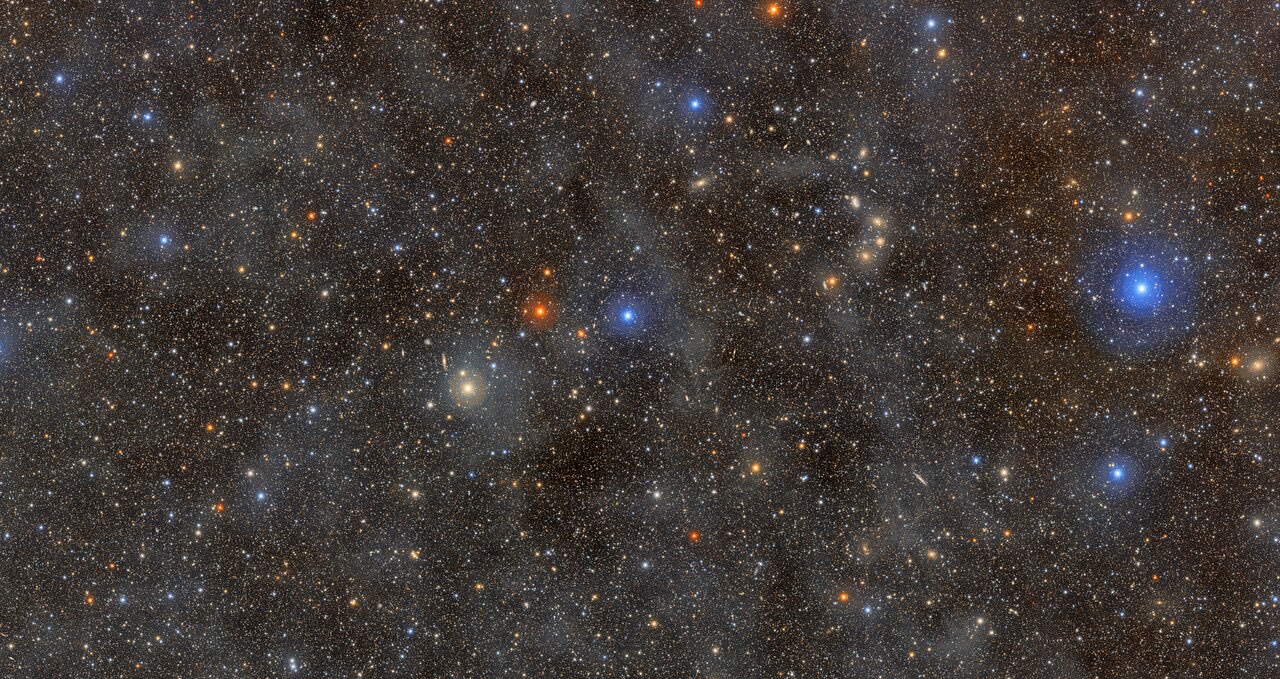
The Vera C. Rubin Observatory has begun its ten-year Legacy Survey of Space and Time (LSST), which will observe the entire southern sky every few nights for a decade. NSF NOIRLab announced the start of the survey on June 30, 2026. The observatory is jointly operated by NSF NOIRLab and the Department of Energy’s SLAC National Accelerator Laboratory.
Rubin’s 3,200-megapixel camera, the largest digital camera in the world, takes a new image about every 40 seconds, about a thousand a night. Over the decade each point in the sky will be revisited about 800 times. Every night produces about ten terabytes of data and millions of alerts, automatic notices that something in the sky has changed, sent out so other telescopes can follow up.
The survey’s goals were set out in the 2019 LSST reference design, and the first released data were described in Data Preview 1. Even the warm-up was productive: during early optimization surveys lasting a month and a half, Rubin discovered over 11,000 new asteroids, including 33 near-Earth objects and 380 objects beyond Neptune.
LSST turns the sky into a decade-long time-lapse. That record will feed research on dark energy and dark matter, exploding and flickering objects, and the small bodies of the Solar System. A survey this large is a starting line rather than a result, and its biggest payoffs will come as the years of data pile up. More in our telescopes and missions guide.
What to watch next: the first LSST data releases and the flood of discoveries from its nightly alerts.
Primary source
This summary is based on NSF NOIRLab. Read the original for full details, data and caveats.
This week in papers
The week's most important results, one line each, every week.