2025
Hurowitz et al., Nature, 645, 332-340, 2025
Cheyava Falls (2025): A Potential Biosignature on Mars
Found in 2025 a potential biosignature in Cheyava Falls, a Mars rock with leopard spots. Joel Hurowitz's Perseverance team says Earth labs must decide.
Joel Hurowitz and NASA’s Perseverance team reported in 2025 that a Mars rock nicknamed Cheyava Falls holds a potential biosignature: tiny “leopard spots” of iron minerals beside organic carbon, a pairing that on Earth often involves microbes. It could also have formed without life.
The question
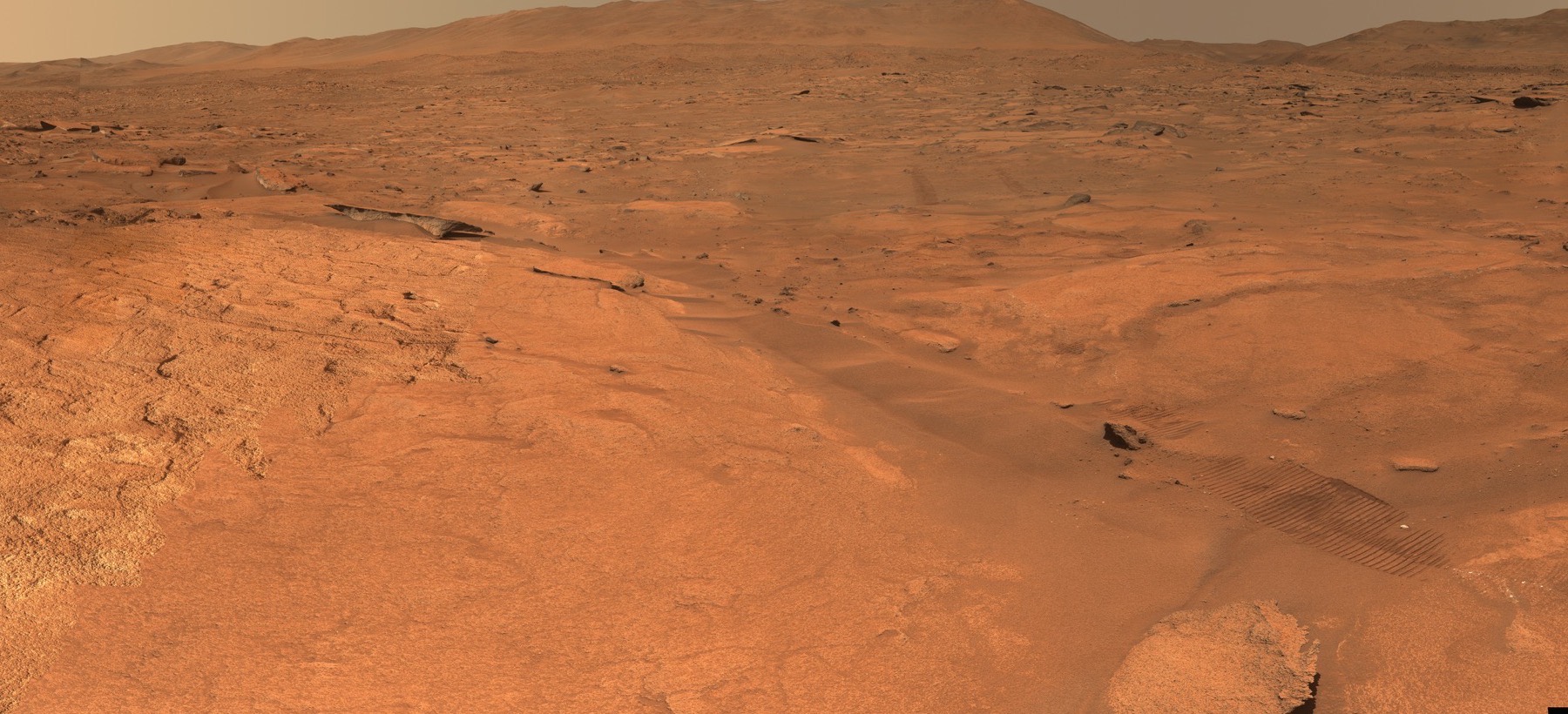
Was ancient Mars ever home to life? Perseverance landed in Jezero Crater, a basin once fed by rivers, to look for rocks that could preserve signs of past microbes. In July 2024 it reached the Bright Angel formation, outcrops along the edges of Neretva Vallis, an ancient river valley about 400 meters wide that carried water into the crater. Its mudstones, made of clay and silt, are the kind of rock that preserves traces of microbial life well on Earth.
What the paper found
- Leopard spots. The arrowhead-shaped rock, about 1 meter by 0.6 meters, shows millimeter-scale spots ringed by reaction fronts.
- Two telltale minerals. The spots contain vivianite, an iron phosphate, and greigite, an iron sulfide.
- Organic carbon alongside. These minerals occur together with organic carbon in the mudstone, which is also rich in sulfur, oxidized iron and phosphorus.
- A familiar chemistry. On Earth, such associations often form through redox reactions, electron transfers between sediment and organic matter, that are driven by microbes harvesting energy.
- A sample for Earth. The rover drilled a core from the rock, named Sapphire Canyon, for possible return to Earth.
How they did it
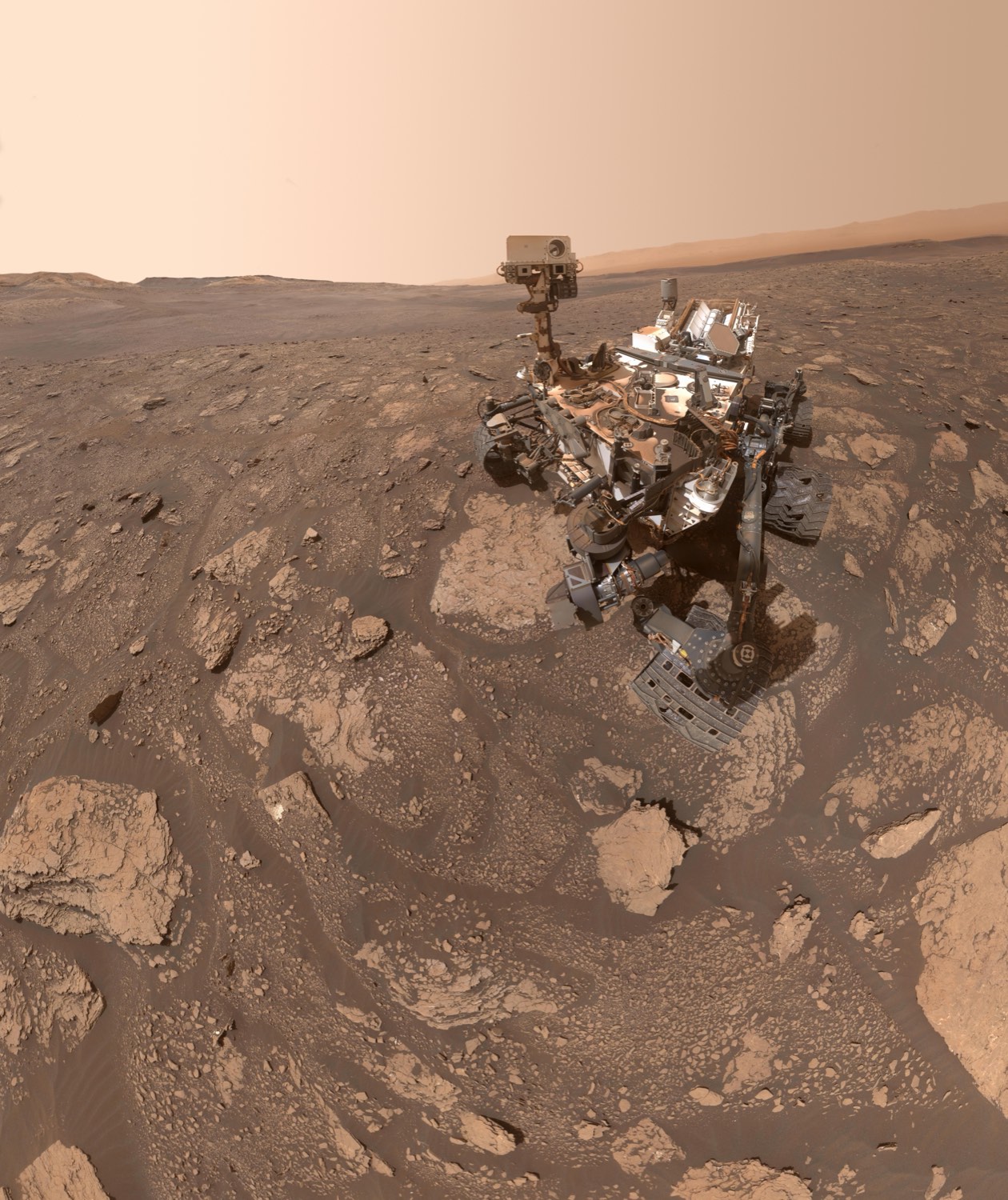
Two of the rover’s instruments did the close-up work. PIXL (Planetary Instrument for X-ray Lithochemistry) maps the elements in a rock surface, and SHERLOC (Scanning Habitable Environments with Raman and Luminescence for Organics and Chemicals) detects organic molecules and minerals. High-resolution maps showed the minerals arranged into reaction fronts around the spots.
The team then weighed every explanation. These minerals can form without life, through sustained high temperatures, acidic conditions, or binding by organic compounds. The Bright Angel rocks show no evidence of high temperatures or acidic conditions, and it is unknown whether the organic compounds present could drive the reactions at low temperatures.
Why it mattered
NASA calls the features a potential biosignature, which it defines as “a substance or structure that might have a biological origin but requires more data or further study” before a conclusion can be reached. It is not evidence of life. It is considered the strongest candidate sign of ancient life yet found on Mars, and it makes a scientific case for bringing samples back to Earth.
The rocks were also a surprise: they are among the youngest sedimentary rocks the mission has examined. An earlier hypothesis held that signs of ancient life would be confined to older rocks, so the find suggests Mars may have stayed habitable longer, or later in its history, than assumed. And the careful framing shows how far the bar has risen since the ALH84001 meteorite claim of 1996, which was never confirmed.
What we know now
Jezero keeps adding context for astrobiology. In September 2026 a separate study found that rocks on the crater’s rim were altered by water at least three times, with reactions that can release hydrogen, a possible microbial food. Organic chemistry without life is well established, as the Miller-Urey experiment of 1953 first showed, which is why the Sapphire Canyon sample needs instruments on Earth to settle its origin.
Who wrote it
Joel Hurowitz of Stony Brook University in New York led the paper with M. M. Tice, A. C. Allwood and members of the Perseverance science team. It was published in Nature on 10 September 2025, the same day NASA announced the result.
Read the original
Hurowitz, J. A., Tice, M. M., Allwood, A. C., et al. (2025). “Redox-driven mineral and organic associations in Jezero Crater, Mars.” Nature 645, 332-340. doi:10.1038/s41586-025-09413-0
Free to read: publisher PDF at Nature.
This week in papers
Five new results in one line each, plus one landmark like this one. Weekly.
Keep reading
Madhusudhan et al., The Astrophysical Journal Letters, 956, L13, 2023
K2-18b: Methane and CO2 on a Possible Ocean World
Detected in 2023 methane and carbon dioxide on K2-18 b with JWST. Madhusudhan's team proposed an ocean world; its tentative DMS hint is disputed.
Postberg et al., Nature, 618, 489-493, 2023
Phosphates on Enceladus: A Key Ingredient for Life Found
Detected in 2023 phosphates from the ocean of Saturn's moon Enceladus, at least 100 times Earth's levels. Frank Postberg's team used Cassini ice grains.
Waite et al., Science, 356, 155-159, 2017
Enceladus Plume Hydrogen: Signs of Hydrothermal Activity
Found in 2017 molecular hydrogen in the plume of Saturn's moon Enceladus. Hunter Waite's Cassini team traced it to hydrothermal reactions in its ocean.