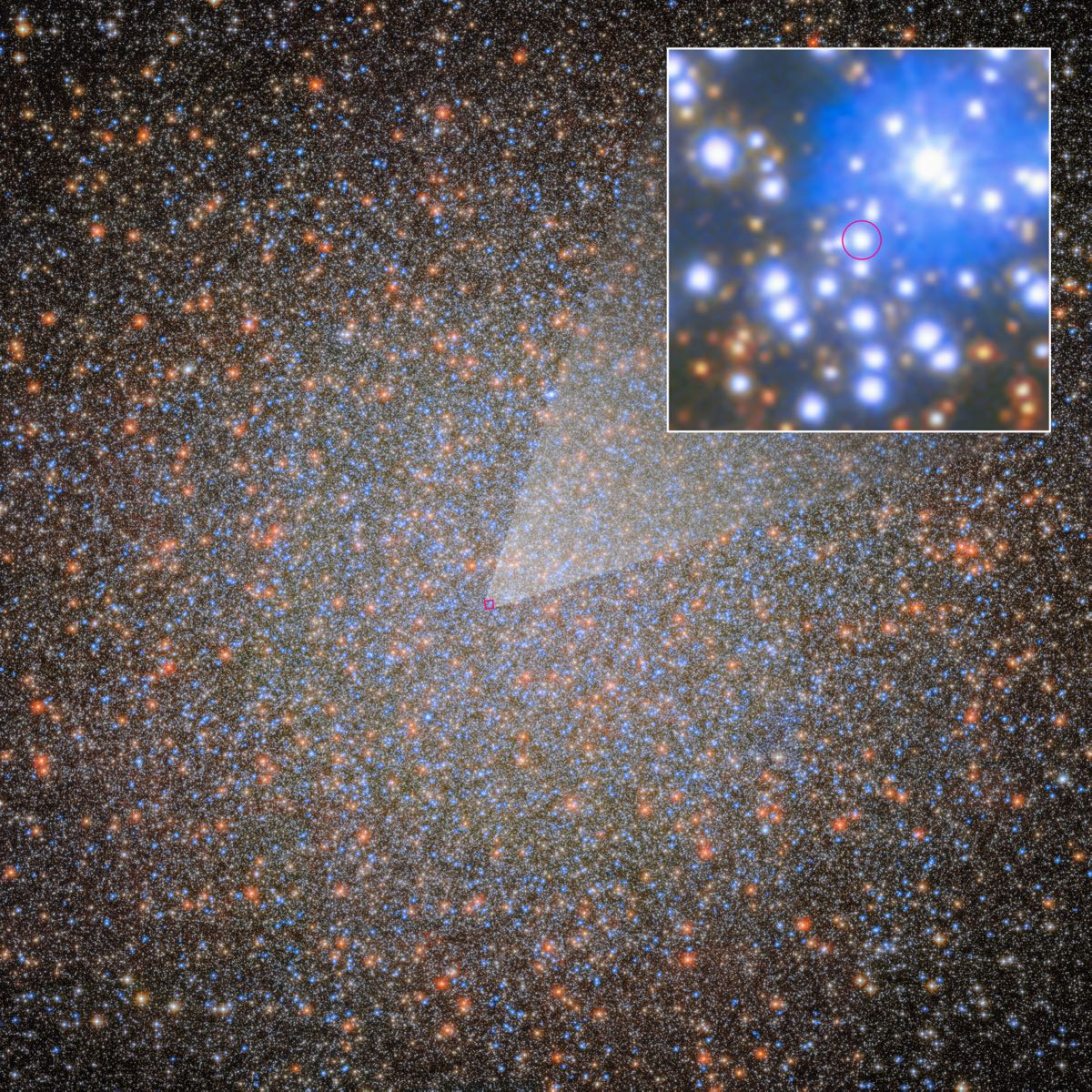
S301, the Milky Way's Fastest Known Star, Could Reveal Sgr A*'s Spin
VLTI's GRAVITY found S301 whipping around Sagittarius A* at over 8% of light speed, close enough to measure the black hole's spin within a decade.
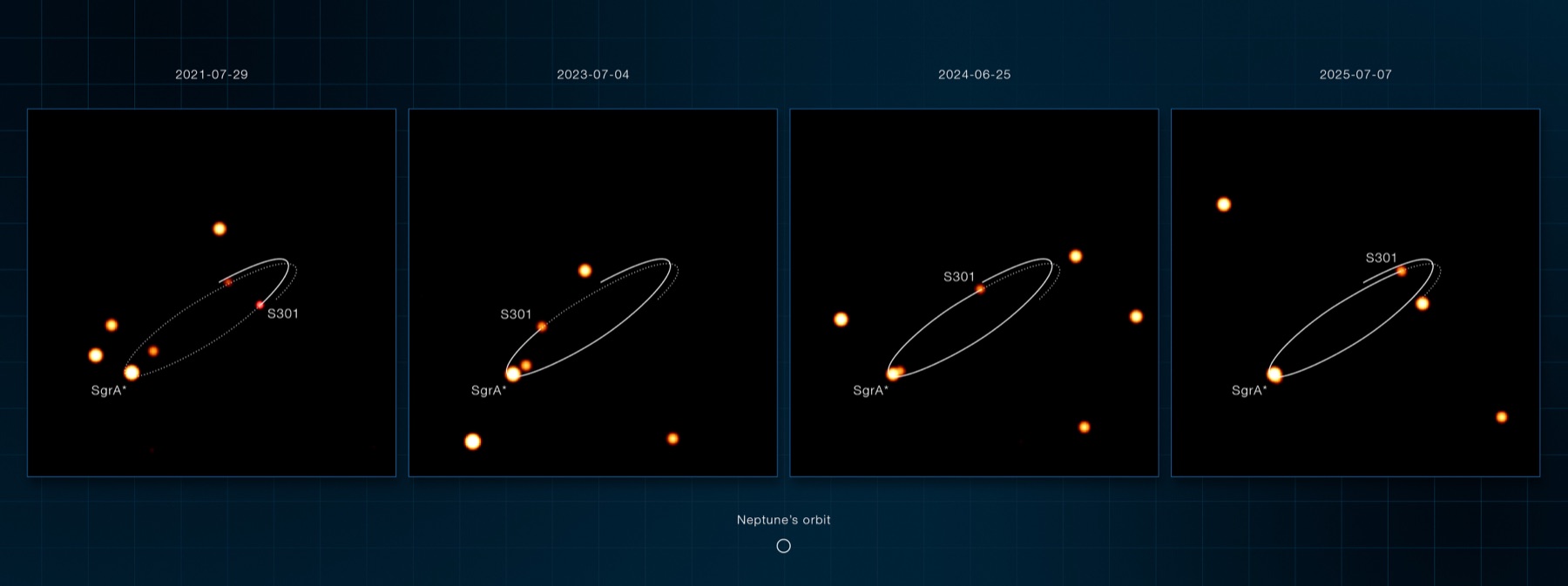
Astronomers have found S301, the fastest known star in the Milky Way, orbiting Sagittarius A*, the supermassive black hole at our galaxy’s center. At closest approach it reaches about 25,000 km/s, more than 8% of the speed of light. The discovery, made with the GRAVITY/GRAVITY+ instrument on ESO’s Very Large Telescope Interferometer, is published in Nature, and ESO announced it on August 19, 2026.
S301 circles the black hole, which has about four million times the Sun’s mass, every 8.7 years. Its closest pass brings it within 1.78 billion km, about 12 times the Earth-Sun distance. It last swung by in early 2023 and will do so again in 2031. That mass was pinned down by tracking earlier stars on tight orbits, including the Keck-based measurement of 2008. S301 was probably once half of a binary star that the black hole’s tides tore apart; its companion was likely flung away.
The big prize is spin. In general relativity, every real black hole is described by just two numbers, mass and spin, the result found by Roy Kerr in 1963. A spinning black hole drags space around with it, which slightly changes the orbits of nearby stars. S301 is the first star known that could reveal that effect for a supermassive black hole, a sharp new test of general relativity. The team hopes to measure the spin directly within about 10 years by following at least two full orbits. More in our black holes guide.
What to watch next: S301’s next closest approach in 2031, a key data point for the spin measurement.
Primary source
This summary is based on ESO and the peer-reviewed paper. Read the original for full details, data and caveats.
This week in papers
The week's most important results, one line each, every week.