Hubble Data Reveal a Candidate Second-Generation Planet
Niobium in Hubble spectra of white dwarf HS 0209+0832 hints at a gas giant built from a dying star's ejecta, a first of its kind if confirmed.
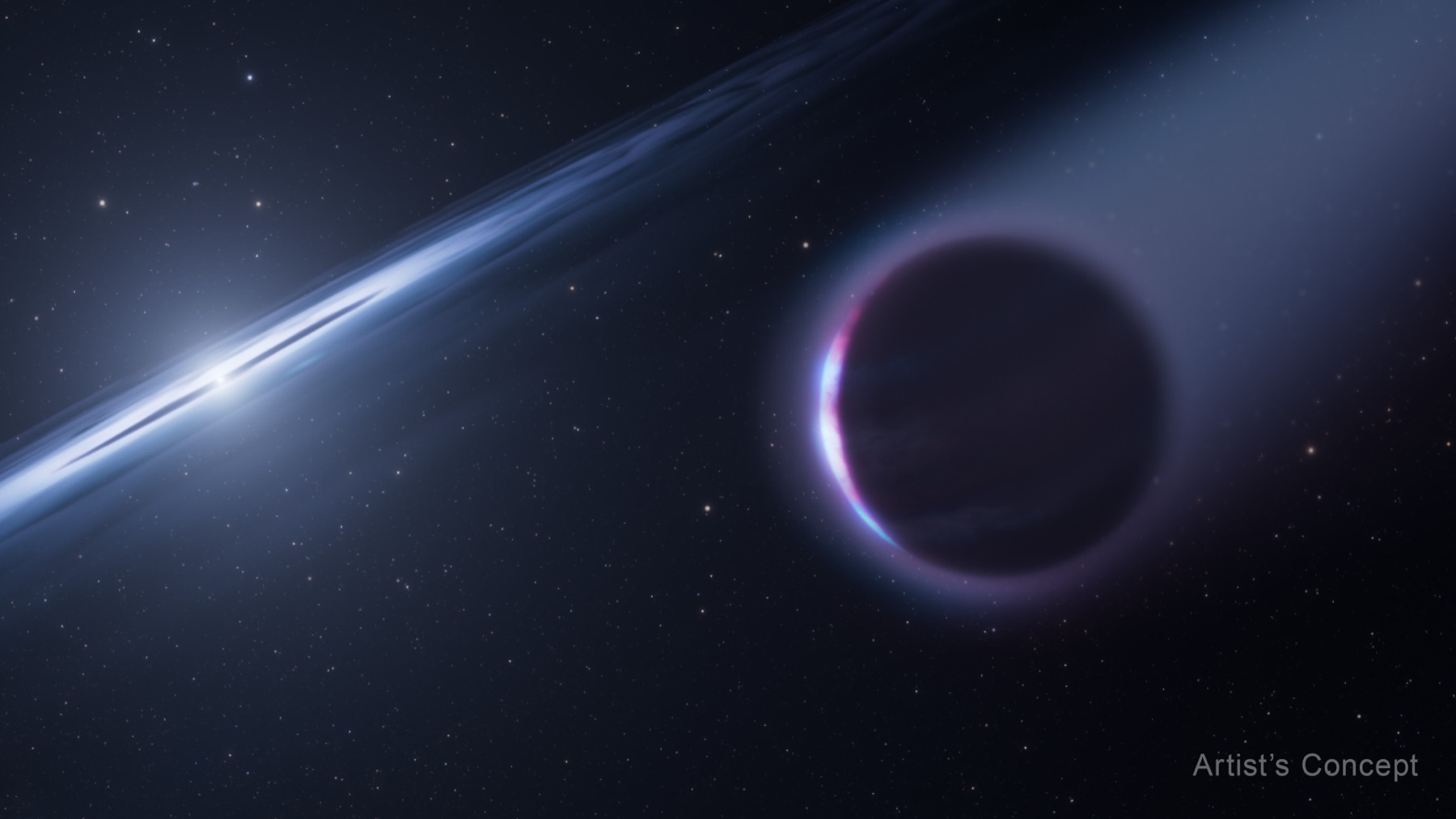
Astronomers have found the first candidate for a second-generation planet, one that appears to have formed from a star’s death rather than its birth. The work, led by Jamie Williams of the University of Warwick, is published in Nature Astronomy, and ESA/Hubble announced it on October 5, 2026. The planet orbits HS 0209+0832, a white dwarf, the dense core left behind when a Sun-like star dies.
The clue sat in old data. Hubble spectra of the star taken in 1999 contained about 100 unidentified features. Williams matched many of them to niobium, an element not reported in any other white dwarf analyzed to date. Elements heavier than iron, like niobium, are not made by ordinary fusion in a star’s core, so the material most likely came from the ejecta of the dying star. Archival data from NASA’s FUSE satellite confirmed the niobium. Four months of TESS observations then showed a regular brightness pattern that suggests a planet about 6 million km from the white dwarf: a Jupiter-sized gas giant that appears to be losing its atmosphere quickly to its hot, young host.
Planets around dead stars are not new in themselves. The first confirmed exoplanets, found in 1992, orbit a pulsar. What sets this case apart is chemical evidence tying the planet’s raw material to the star’s death. It is still a candidate. If confirmed, stars could host a second round of planet formation long after their main lives end, which adds a new chapter to the far future of planetary systems. More in our exoplanets guide.
What to watch next: independent observations are needed to confirm the planet and measure its mass.
Primary source
This summary is based on ESA/Hubble and the peer-reviewed paper. Read the original for full details, data and caveats.
This week in papers
The week's most important results, one line each, every week.