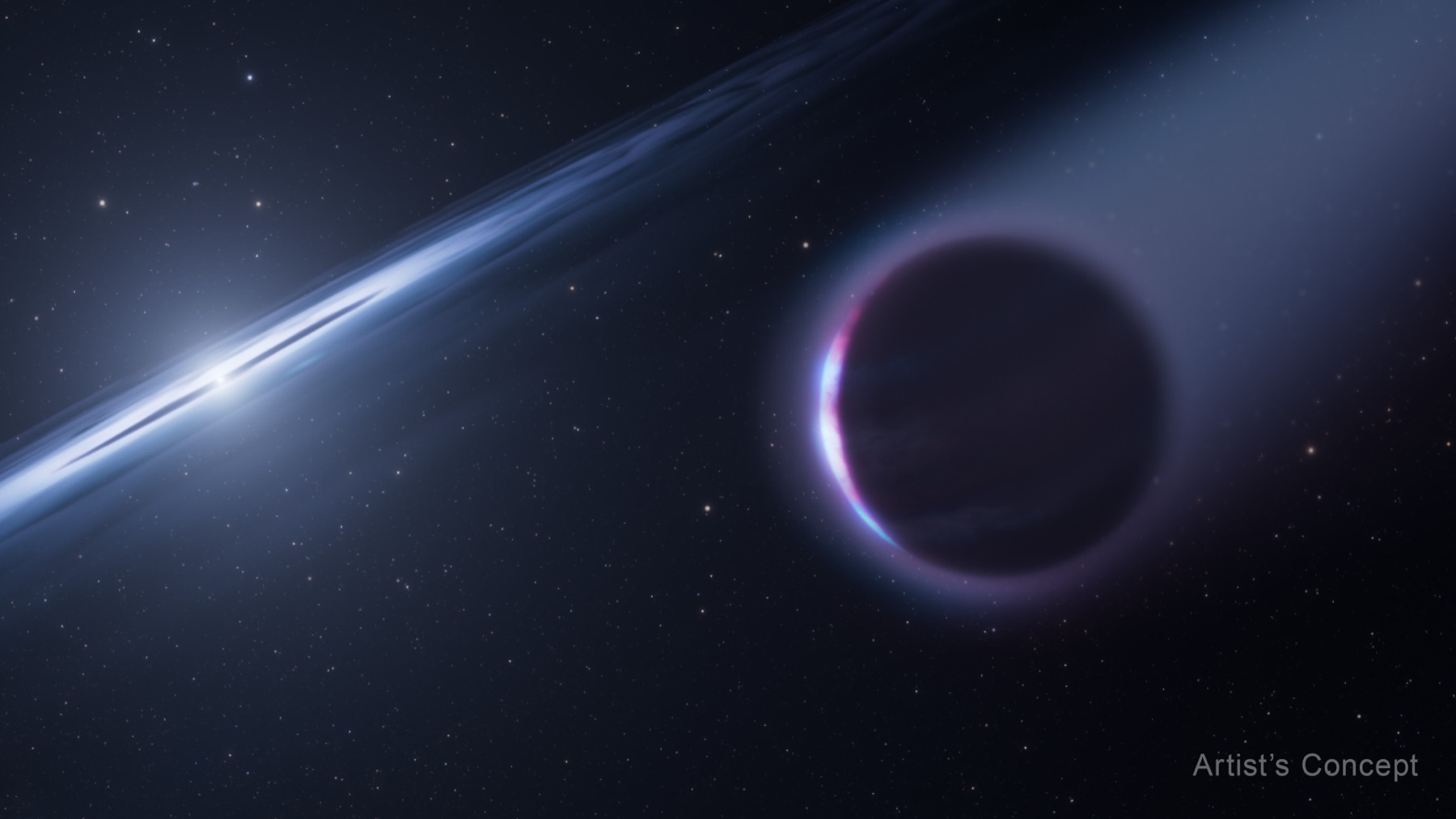
1992
A. Wolszczan and D. A. Frail, Nature, 355, 145-147, 1992
The First Exoplanets (1992): Planets Around a Dead Star
Found in 1992 the first confirmed planets beyond the Solar System. Wolszczan and Frail timed pulsar PSR 1257+12 and caught two worlds a few Earths in mass.
Aleksander Wolszczan and Dale Frail discovered the first confirmed planets outside the Solar System in 1992. Timing the radio pulses of PSR 1257+12, a dead star spinning about 160 times a second, they found two worlds a few times Earth’s mass. Planets can circle a stellar corpse.
What was known before 1992?
Every planet anyone had ever seen orbited the Sun. Astronomers suspected other stars had planets too, but no claim had held up, and a 1991 report of a planet around another pulsar, PSR 1829-10, was later retracted. A pulsar also looked like the last place to search. It is a neutron star, the collapsed core left behind when a massive star explodes, and the kind of object first caught in the 1968 discovery of pulsars. Any planets it once had should have been destroyed.
What the paper found
- A pulsar that keeps near-perfect time. PSR 1257+12 spins once every 6.2 milliseconds, sweeping a radio beam past Earth like a lighthouse.
- A wobble in the ticks. The arrival times of its pulses drifted early and late in a repeating pattern built from two periods, 66.6 and 98.2 days.
- Two planets, not a star. The pattern fits two bodies with minimum masses of 3.4 and 2.8 Earth masses, at 0.36 and 0.47 AU (1 AU is the Earth-Sun distance), on nearly circular orbits comparable to Mercury’s distance from the Sun.
- The first confirmed exoplanets. No companion star could produce such a signal, and the usual causes of pulsar timing noise were ruled out.
How they did it
The pair used the 305-meter Arecibo radio telescope in Puerto Rico to record when each pulse arrived. The method is called pulsar timing. A planet and its star orbit a shared center of mass, so the pulsar itself traces a tiny loop. When it swings slightly toward us, its pulses arrive a little early; when it swings away, a little late. Because a millisecond pulsar is such a steady clock, even an Earth-mass tug shows up in the timing record.
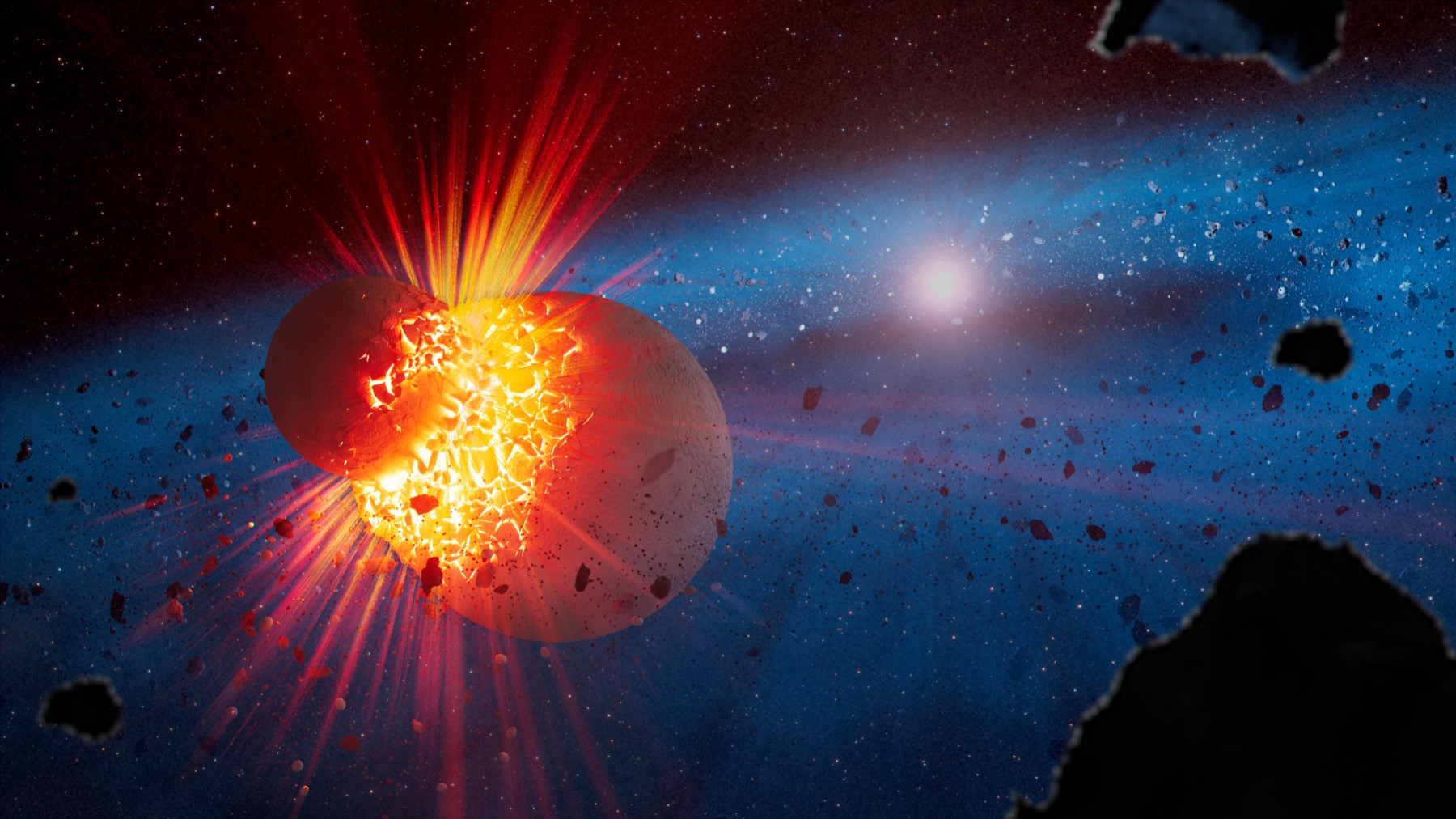
The authors also proposed how the planets got there: they may be “second generation” worlds that formed after the explosion, from a disk of debris around the neutron star.
Why it mattered
This was the first time anyone had confirmed a planet beyond the Solar System, and it came from the most hostile setting imaginable. It showed that planets can form or survive in extreme environments. Three years later, the 1995 discovery of 51 Pegasi b found the first planet around a Sun-like star, the result that turned exoplanets into a full field of study.
What we know now
A follow-up study in 1994 confirmed a third, much smaller planet in the system, roughly the mass of the Moon, on a 25.3-day orbit. The International Astronomical Union later named the pulsar Lich and its planets Draugr, Poltergeist and Phobetor.
Pulsar planets have stayed rare. As of November 2022, only seven confirmed planets had been found by pulsar timing, out of more than 5,000 known exoplanets. The timing technique itself has thrived: NANOGrav now times dozens of millisecond pulsars, with Arecibo once among its telescopes, to listen for gravitational waves.
Who wrote it
Aleksander Wolszczan was working at the Arecibo Observatory at the time and later moved to Penn State. He and radio astronomer Dale Frail published the result as a three-page letter in Nature on 9 January 1992.
Read the original
Wolszczan, A. and Frail, D. A. (1992). “A planetary system around the millisecond pulsar PSR1257+12.” Nature 355, 145-147. doi:10.1038/355145a0
The journal version may require a subscription. Semantic Scholar lists about 1,300 citations (October 2026).
This week in papers
Five new results in one line each, plus one landmark like this one. Weekly.
Keep reading
Mayor and Queloz, Nature, 378, 355-359, 1995
51 Pegasi b: The First Planet Around a Sun-Like Star
Found in 1995 the first planet orbiting a Sun-like star. Mayor and Queloz detected 51 Pegasi b, a hot Jupiter that circles its star every 4.23 days.
Charbonneau et al., The Astrophysical Journal Letters, 529, L45-L48, 2000
First Transiting Exoplanet: HD 209458 b Crosses Its Star
Detected the first planet crossing in front of its star in 2000. Charbonneau and colleagues measured HD 209458 b's size, the start of the transit method.
Marois et al., Science, 322, 1348-1352, 2008
HR 8799: The First Photo of a Multi-Planet System
Photographed in 2008 three giant planets orbiting the young star HR 8799. Marois and colleagues used Keck and Gemini to image a whole planetary system.
Topic guide
Exoplanets
Recent news in exoplanets