Elias 2-24 b Is the Youngest Exoplanet Yet, Still Growing in Its Disk
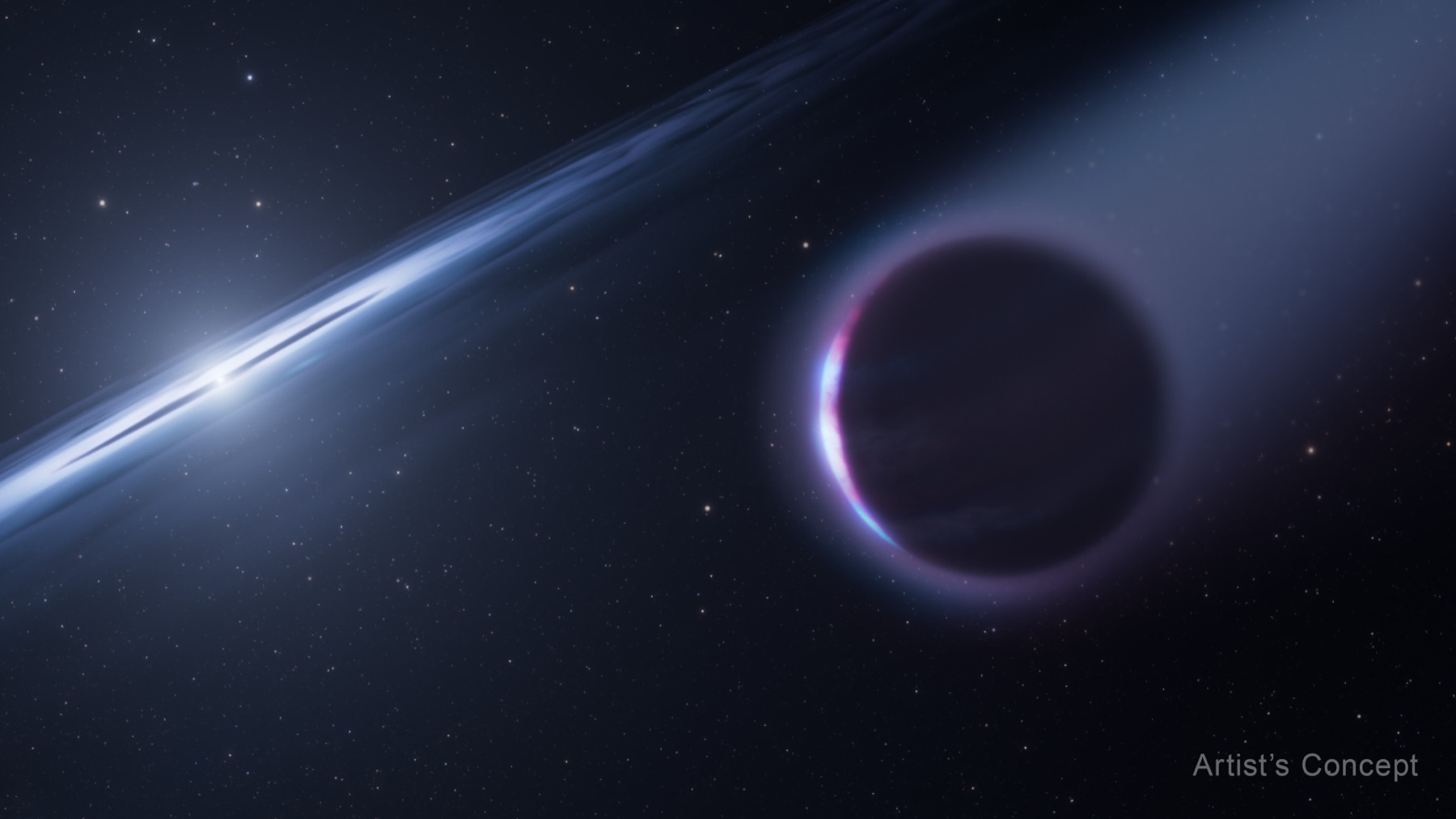
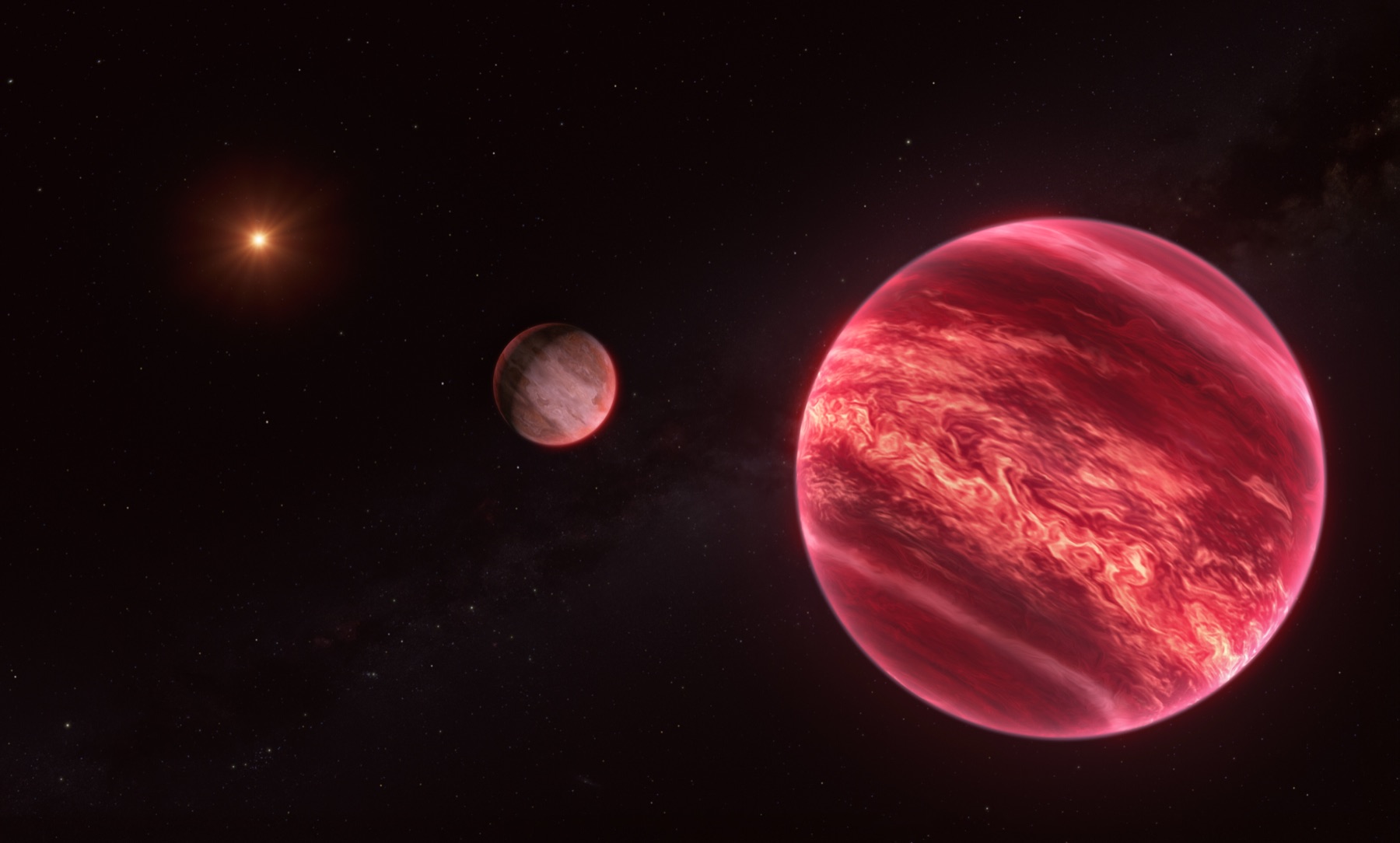
At about 1 million years old or less, Elias 2-24 b is the youngest known exoplanet, caught pulling in gas inside a gap in its star's disk.
Elias 2-24 b is the youngest exoplanet detected so far, with an age of about 1 million years or less, still gathering gas inside a gap in the disk around its star. The result is published in The Astrophysical Journal Letters (preprint arXiv:2609.23122), and the W. M. Keck Observatory announced it on September 16, 2026. For scale, the Sun is about 4.6 billion years old.
The signal first showed up in 2018 images from Keck’s NIRC2 camera. Andrea Bernardi of Diego Portales University recovered it from the Keck Observatory Archive, and later Keck data from 2020, plus observations with ESO’s Very Large Telescope and ALMA, confirmed it. The planet sits in a narrow gap in the star’s protoplanetary disk, the flat ring of gas and dust where planets form, about 55 au out (55 times the Earth-Sun distance). Comparing its brightness with models of 1-million-year-old planets gives a mass between 1.9 and 4.0 times Jupiter’s, not counting the extra glow from infalling gas.
Disk gaps have long been read as the footprints of unseen planets. Here the planet is in the gap and still accreting, which links the two directly. It also supports the core accretion model, in which a solid core forms first and then pulls in a thick envelope of gas. Directly imaging planets this young builds on work that began with the first direct images of a multi-planet system, HR 8799, in 2008. More in our exoplanets guide.
What to watch next: further imaging can track the planet’s orbit and measure how fast it is still growing.
Primary source
This summary is based on W. M. Keck Observatory and the peer-reviewed paper. Read the original for full details, data and caveats.
This week in papers
The week's most important results, one line each, every week.