Webb Studies 21 Extreme Debris Disks Left by Planet-Shattering Impacts
Webb and Spitzer data on 21 dusty young systems show two kinds of crashes: rock-vaporizing hits between Mars-sized bodies and gentler grazing collisions.
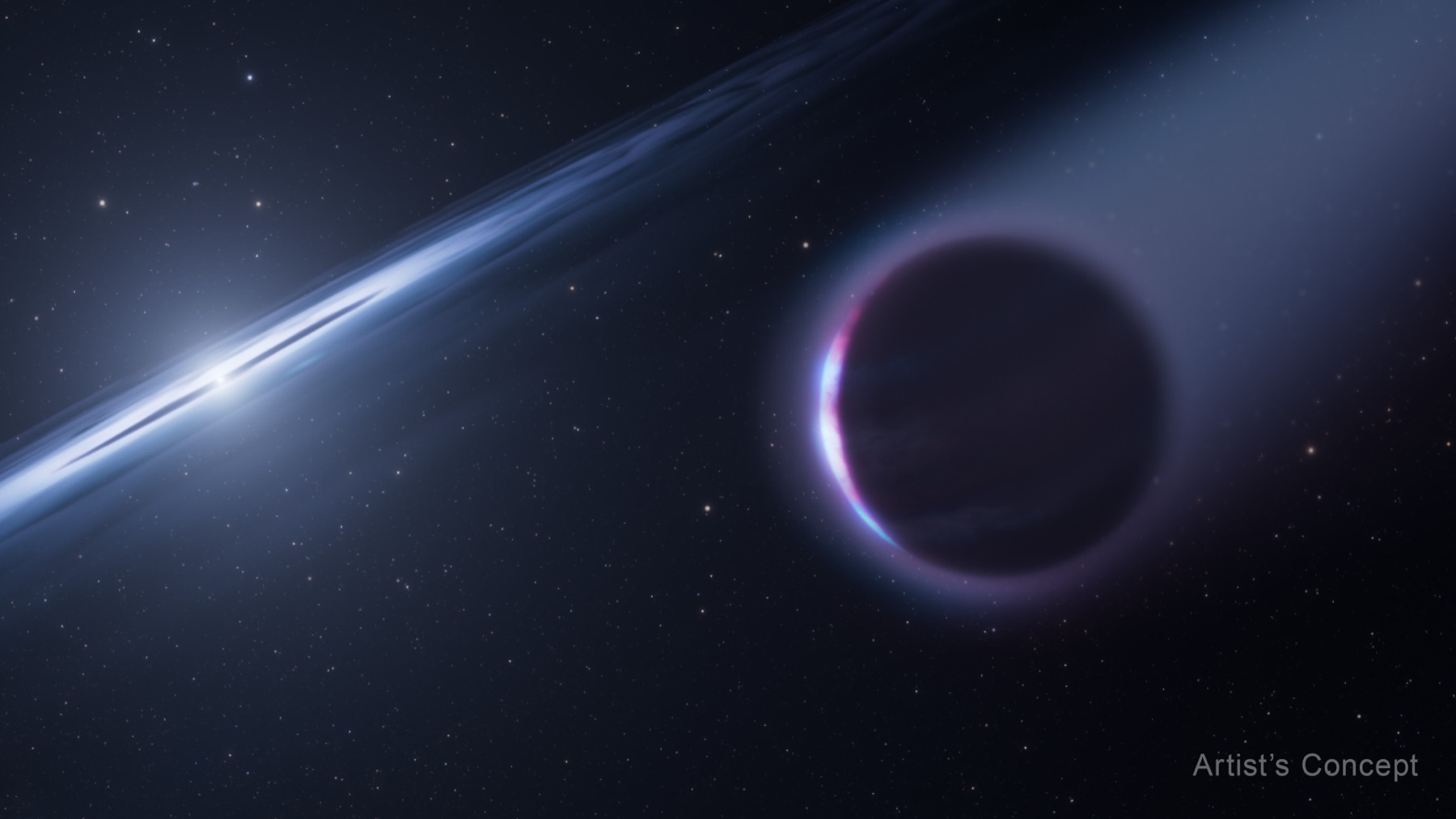
The James Webb Space Telescope has examined extreme debris disks, clouds of unusually warm dust packed close to young stars in the zone where rocky planets form. A team led by Kate Su of the Space Science Institute assembled 21 of these rare systems and published the results in The Astrophysical Journal. ESA/Webb announced the study on October 1, 2026.
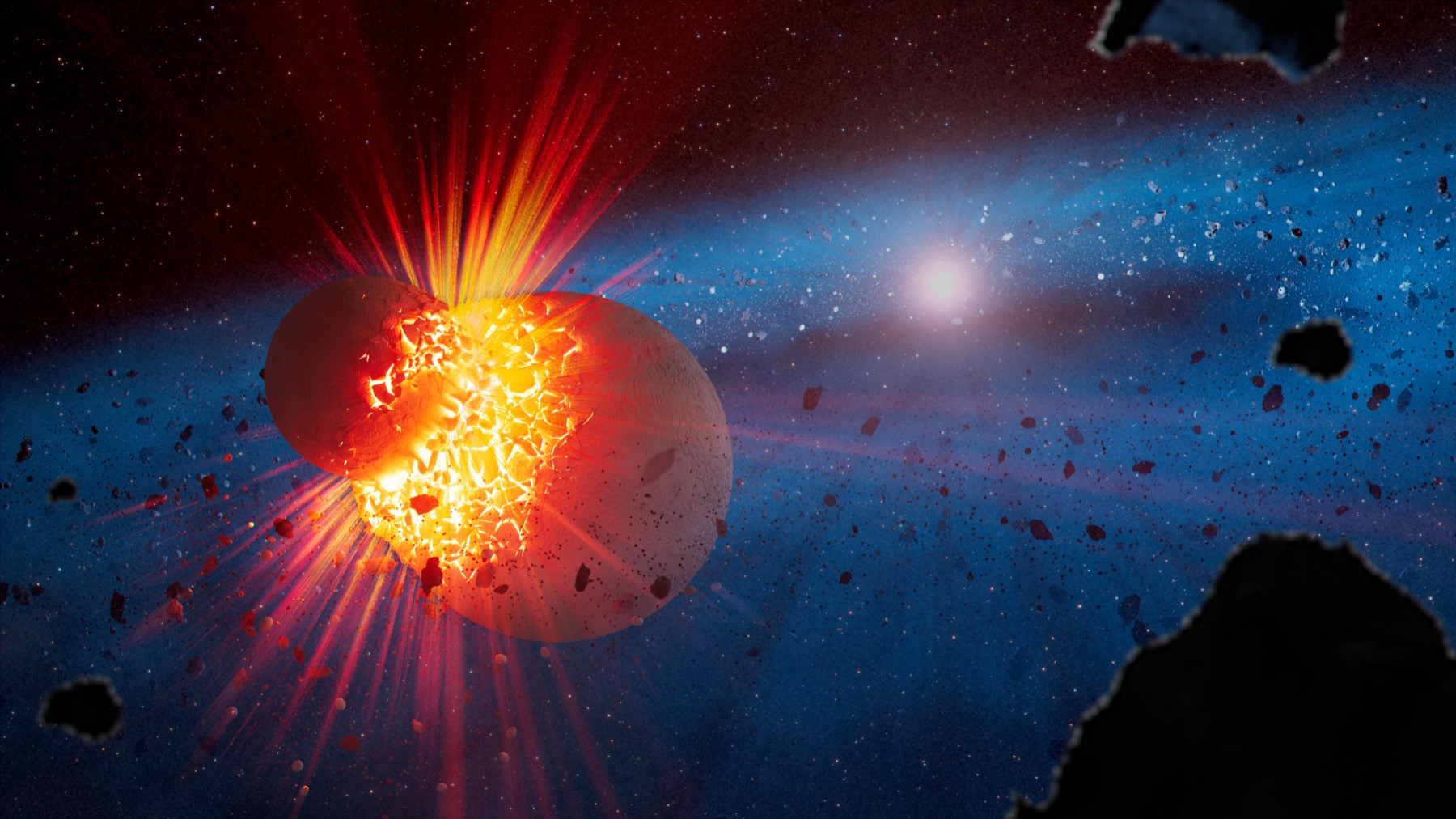
Only about 1% of young stars show signs of this dusty phase in the data so far, so a sample of 21 is large for the field. Five came from the archives of NASA’s retired Spitzer Space Telescope and 16 were observed with Webb, 12 of them for the first time. Infrared spectra reveal what the dust is made of, and that splits the sample in two. About one-third of the disks are rich in silica, which points to high-energy impacts between Mars-sized bodies violent enough to vaporize rock. The other two-thirds are silica-poor, consistent with smaller, grazing collisions between Moon-sized objects.
These systems capture the messy, violent stage when rocky planets are assembled from smaller bodies. Our own Solar System went through it too: Earth’s Moon is thought to have formed from a giant impact, an idea first proposed in 1975 by Hartmann and Davis. Twenty-one disks still make a small sample, and the dust shows the aftermath of collisions rather than the planets that survive them. For how planets form and what we find around other stars, see our exoplanets guide and our Solar System guide.
What to watch next: follow-up observations of the same disks over time can show how quickly the dust from each collision clears.
Primary source
This summary is based on ESA/Webb and the peer-reviewed paper. Read the original for full details, data and caveats.
This week in papers
The week's most important results, one line each, every week.