2017
Fulton et al., The Astronomical Journal, 154, 109, 2017
The Fulton Gap (2017): A Missing Size of Small Planets
Found in 2017 a gap in the sizes of small planets between 1.5 and 2 Earth radii. Fulton's team split close-in worlds into super-Earths and sub-Neptunes.
Benjamin Fulton and colleagues discovered in 2017 that small planets avoid one size: between 1.5 and 2 times Earth’s radius. Using sharper measurements of 2,025 Kepler planets, they split close-in small worlds into rocky super-Earths and gas-wrapped sub-Neptunes. The pattern is called the Fulton gap.
The question
NASA’s Kepler mission revealed that the most common planets in its sample are bigger than Earth but smaller than Neptune, a kind of world our Solar System does not have. Are they giant rocks, small gas planets, or a mix? Planet sizes from transits depend on the size of the host star, and many star sizes were uncertain by about 25%. That blur hid any fine structure in the size distribution.
What the paper found
- A clean sample. The team recomputed the radii of 2,025 Kepler planets, with typical uncertainties of about 12%.
- A missing size. Planets between 1.5 and 2.0 Earth radii are at least a factor of two rarer than planets just smaller or larger.
- Two families. Close-in small planets, those with orbits shorter than 100 days, fall into two groups: smaller than 1.5 Earth radii, and 2.0 to 3.0 Earth radii.
- Equally common. After correcting for how easily Kepler detects each kind, both groups occur at nearly the same rate.
How they did it
The California-Kepler Survey measured the host stars themselves. The team took high-resolution spectra of 1,305 Kepler host stars with the HIRES spectrograph at the W. M. Keck Observatory in Hawaii. A spectrum reveals a star’s temperature, surface gravity and chemical makeup, and from those the team derived better star sizes. Median uncertainties in stellar radius dropped from 25% to 11%.
Since a transit gives a planet’s size relative to its star, a better star size gives a better planet size. The team then removed false positives, applied cuts to keep only well-measured planets, and corrected for Kepler’s detection efficiency before counting how often each size occurs.
Why it mattered
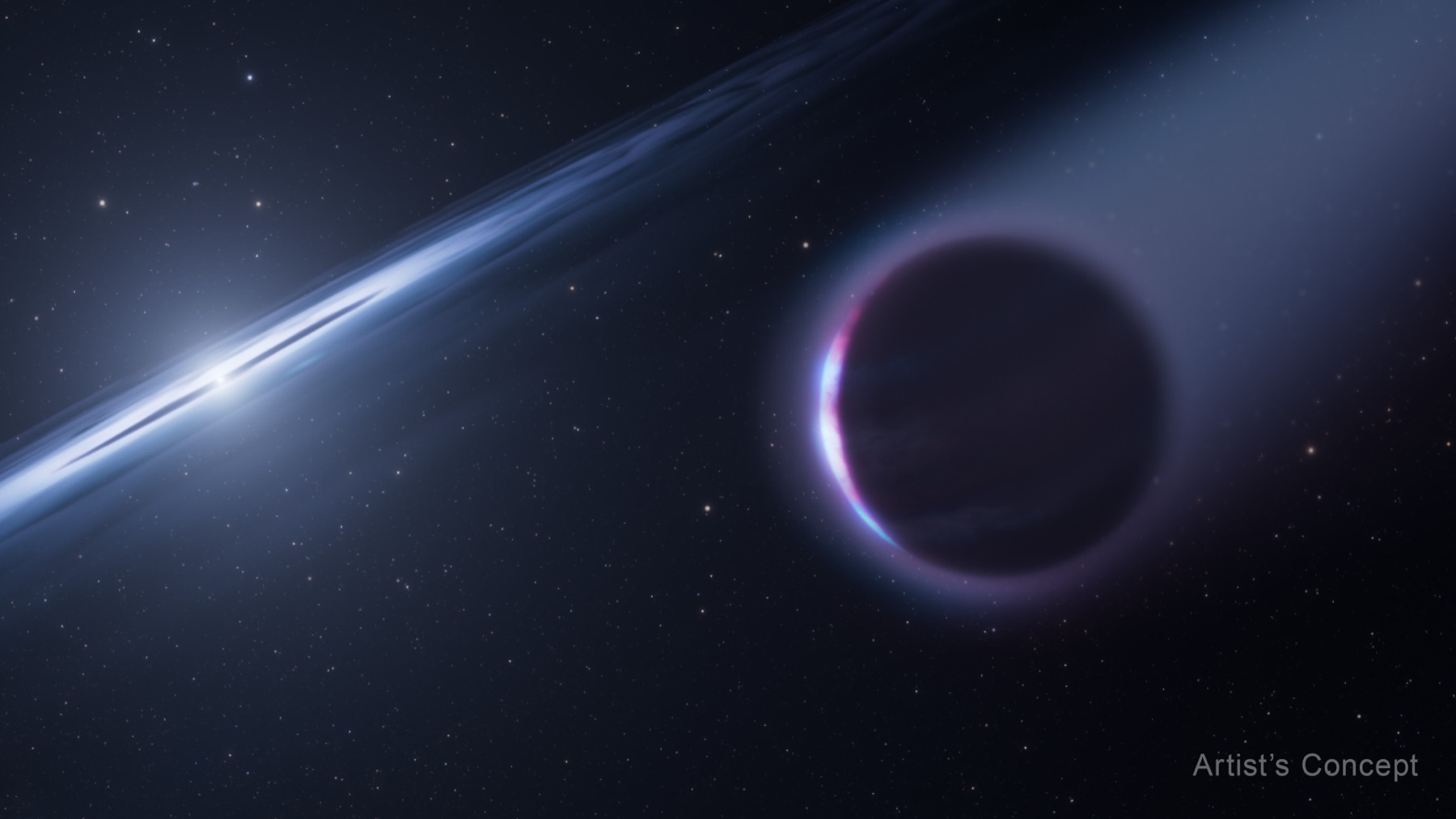
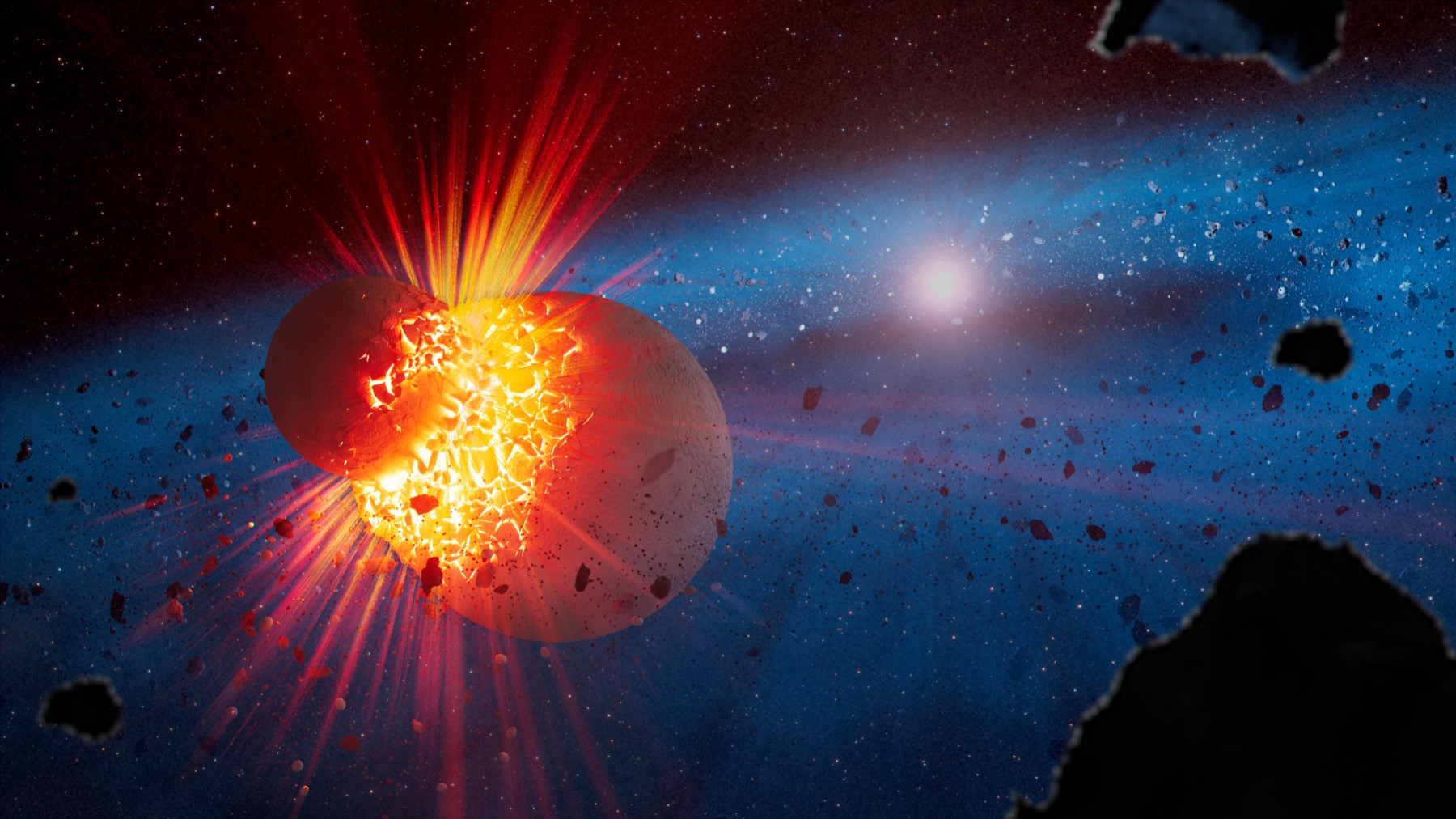
The gap points to a simple picture. Close-in planets smaller than Neptune seem to be built on rocky cores of about 1.5 Earth radii or less. What decides their final size is how much low-density hydrogen and helium they keep around that core, and very little gas goes a long way. In models the paper cites, a bare rocky planet of 2 Earth masses is 1.2 Earth radii across; wrapping it in hydrogen and helium worth less than 1% of its mass swells it to 2.0 Earth radii. One explanation the authors discuss is photoevaporation: radiation from the host star strips thin envelopes away, leaving bare super-Earths below the gap, while planets that hold on to their gas stay above it as sub-Neptunes.
That makes the Fulton gap a key test of how exoplanets lose their atmospheres. It also helps decide which small planets are likely to be rocky, and therefore worth checking for habitable conditions, from compact systems like TRAPPIST-1 to planets found by newer surveys.
What we know now
The gap remains one of the clearest patterns in the exoplanet population. Kepler’s data still drive studies of planet occurrence and of the radius gap, and astronomers are still testing which process strips the gas from planets that end up below it.
Who wrote it
Benjamin Fulton, then at the University of Hawaii’s Institute for Astronomy and Caltech, led the study with Erik Petigura, Andrew Howard and colleagues in the California-Kepler Survey. The program used Keck telescope time granted by the University of California, Caltech, the University of Hawaii and NASA. This is the third paper of the survey’s series.
Read the original
Fulton, B. J., Petigura, E. A., Howard, A. W., et al. (2017). “The California-Kepler Survey. III. A Gap in the Radius Distribution of Small Planets.” The Astronomical Journal 154, 109. doi:10.3847/1538-3881/aa80eb
Free to read: arXiv preprint.
This week in papers
Five new results in one line each, plus one landmark like this one. Weekly.
Keep reading
Gillon et al., Nature, 542, 456-460, 2017
TRAPPIST-1: Seven Earth-Size Planets Around One Star
Found in 2017 seven Earth-size planets transiting TRAPPIST-1, a tiny star 40 light-years away. Gillon's team showed several could hold liquid water.
Anglada-Escudé et al., Nature, 536, 437-440, 2016
Proxima b: A Temperate Planet Around the Nearest Star
Found in 2016 Proxima b, a planet of at least 1.3 Earth masses orbiting the nearest star. Anglada-Escudé's team caught the star wobbling every 11.2 days.
JWST Transiting Exoplanet Community Early Release Science Team, Nature, 614, 649-652, 2022
WASP-39b: Webb Detects CO2 in an Exoplanet Atmosphere
Detected in 2022 carbon dioxide in an exoplanet's air for the first time, on the gas giant WASP-39b. Webb's Early Release Science team saw it at 26 sigma.
Topic guide
Exoplanets
Recent news in exoplanets