1965
Roger Penrose, Physical Review Letters, 14, 57-59, 1965
Penrose's Singularity Theorem (1965): Why Black Holes Must Form
Proved in 1965 that once a trapped surface forms, collapse to a singularity is unavoidable in general relativity. Roger Penrose's Nobel-winning theorem.
The Penrose singularity theorem, published by Roger Penrose in January 1965, proved that black holes are a robust prediction of Einstein’s general relativity, not a quirk of idealized models. Once matter collapses far enough to form a “trapped surface”, a singularity is inevitable. The work earned Penrose half of the 2020 Nobel Prize in Physics.
The question before the paper
The first calculation of black hole formation, by Oppenheimer and Snyder in 1939, assumed a perfectly round, pressureless star. Real stars are lumpy, spinning and full of pressure. Perhaps those imperfections would let collapsing matter swirl past itself and avoid forming a black hole altogether. Before this paper it was unclear whether black hole formation was an artifact of idealized symmetric models.
What the paper found
- A new concept: the trapped surface. Penrose defined a closed surface so strongly curved by gravity that light rays sent outward from it are still pulled inward. Nothing inside can get out.
- Singularities are unavoidable. Once a trapped surface forms, general relativity, together with reasonable conditions on the energy of matter, inevitably produces a singularity, a place where spacetime itself ends.
- No symmetry needed. The proof does not assume the collapse is spherical or otherwise idealized. It applies to realistic, messy collapse.
How he did it
Instead of looking for exact solutions of Einstein’s equations, which exist only for very symmetric cases, Penrose used global geometric methods. He studied the overall structure of spacetime, in particular the paths that light rays can follow, and showed that the existence of a trapped surface leads to a contradiction unless some light paths come to an abrupt end. That end is the singularity.
Why it mattered
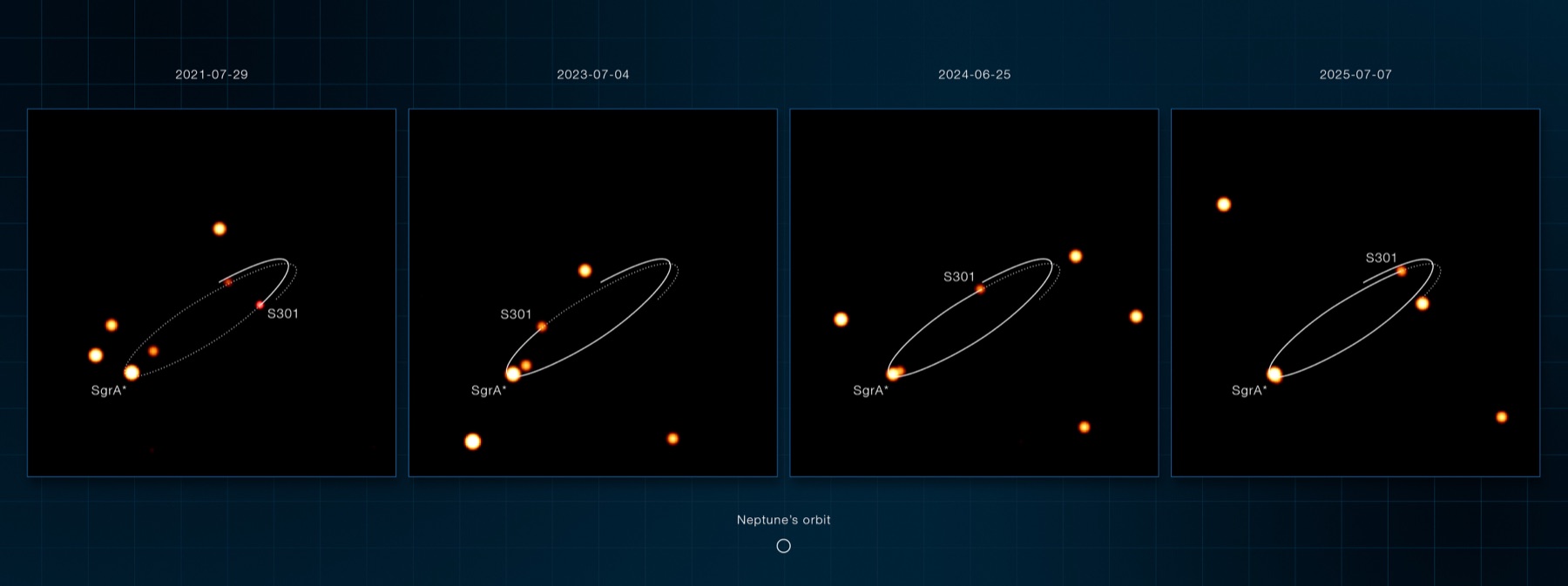
Penrose showed that black holes are a generic outcome of gravity, not a mathematical accident. Stephen Hawking and Penrose later extended the approach to cosmology, implying a singular beginning in classical Big Bang models. In 2020 Penrose received half of the Nobel Prize in Physics “for the discovery that black hole formation is a robust prediction of the general theory of relativity”. The other half went to Reinhard Genzel, of the Max Planck Institute for Extraterrestrial Physics, and Andrea Ghez, whose measurements of stars orbiting the Milky Way’s center revealed a supermassive compact object there.
What we know now
The singularity also marks where general relativity breaks down. At such extreme densities, quantum effects must matter, and no tested quantum theory of gravity exists yet. One hint of how gravity and quantum physics meet came from Hawking’s 1974 discovery that black holes should slowly radiate and evaporate. What really lies at the center of a black hole remains an open question; see our black holes guide.
Who wrote it
Roger Penrose, a British mathematician, wrote the paper alone. It is short, but its methods transformed how physicists study spacetime. The paper has about 1,300 citations in Semantic Scholar as of October 2026.
Read the original
Penrose, R. (1965). “Gravitational Collapse and Space-Time Singularities.” Physical Review Letters 14, 57. doi:10.1103/PhysRevLett.14.57. Free PDF from the American Physical Society.
This week in papers
Five new results in one line each, plus one landmark like this one. Weekly.
Keep reading
Kerr, Physical Review Letters, 11, 237, 1963
The Kerr Black Hole: The Exact Math of a Spinning Black Hole
Found in 1963 the exact solution of Einstein's equations for a spinning mass, describing real black holes by mass and spin alone. Roy Kerr's letter.
Schmidt, Nature, 197, 1040, 1963
The First Quasar: How Maarten Schmidt Decoded 3C 273
Identified in 1963 the star-like radio source 3C 273 as a distant, enormously luminous object: the first quasar. Maarten Schmidt's Nature paper, explained.
Hawking, Nature, 248, 30-31, 1974
Hawking Radiation: How Black Holes Slowly Evaporate
Showed in 1974 that black holes glow faintly and evaporate, ending in a burst. Stephen Hawking's two-page Nature letter on Hawking radiation, explained.
Topic guide
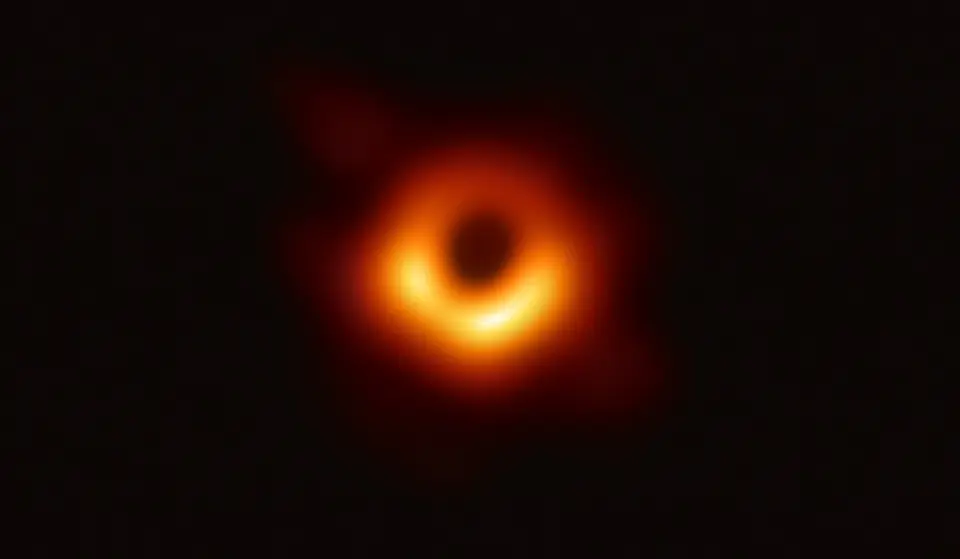
Black holes
Recent news in black holes