1963
M. Schmidt, Nature, 197, 1040, 1963
The First Quasar (1963): How Maarten Schmidt Decoded 3C 273
Identified in 1963 the star-like radio source 3C 273 as a distant, enormously luminous object: the first quasar. Maarten Schmidt's Nature paper, explained.
The first quasar was identified in 1963 by Maarten Schmidt at Caltech. He realized that the puzzling spectrum of 3C 273, a radio source that looked like a faint star, showed ordinary hydrogen lines shifted by a redshift of 0.158. At that distance it had to outshine entire galaxies from a star-sized point, a mystery later solved by supermassive black holes.
The question before the paper
Early radio surveys turned up many sources with no obvious visible counterpart. One of them, 3C 273, had been pinned down precisely on the sky by timing when the Moon passed in front of it, a technique called lunar occultation. At that position sat what looked like a faint star. But its spectrum was a riddle: emission lines that did not fit the usual patterns. What kind of star was this?
What the paper found
- Familiar lines in unfamiliar places. Schmidt recognized the pattern of emission lines as the Balmer series of hydrogen, the same lines seen in countless stars and nebulae, all shifted toward the red.
- A redshift of 0.158. The light was stretched by about 16%, far too much for a star in our galaxy and typical of galaxies far beyond it.
- Impossible brightness from a tiny source. At the distance implied by cosmic expansion, the star-like object had to be far more luminous than ordinary galaxies: the first identified quasar, short for “quasi-stellar radio source”.
How he did it
The breakthrough was recognition rather than new technology. Schmidt laid out the measured wavelengths of the emission lines and noticed that their spacing matched the hydrogen Balmer series exactly, once every line was shifted by the same factor. Converting that shift into a velocity and then, using Hubble’s law, into a distance gave the object’s true power.
The paper appeared in Nature on March 16, 1963, alongside companion papers on the precise radio position and on a related source, 3C 48.
Why it mattered
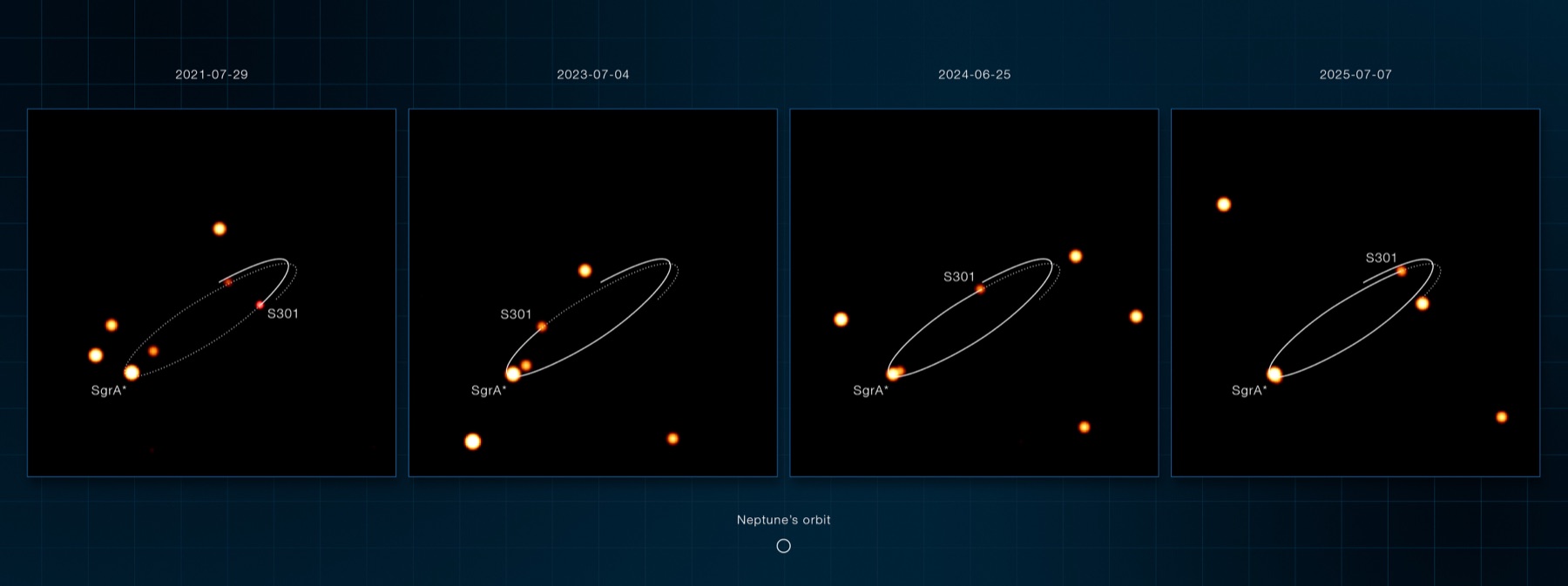
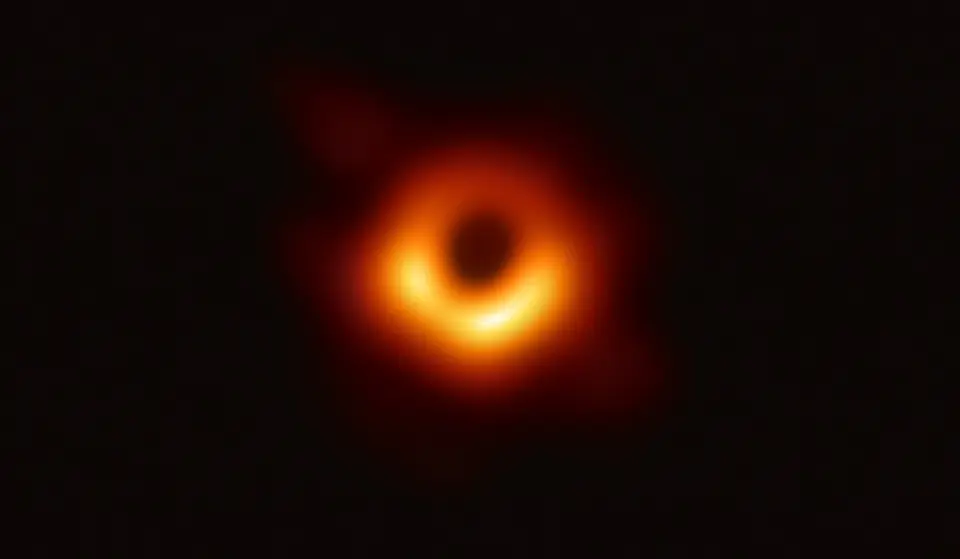
Schmidt’s identification revealed a new class of objects, among the most luminous in the universe, and opened the study of active galactic nuclei, the bright centers of some galaxies. Explaining such enormous output from such a compact region led to the idea that quasars are powered by matter falling onto supermassive black holes. The same physics of giant central black holes was later confirmed in our own galaxy by stars orbiting Sagittarius A* and imaged directly in M87 by the Event Horizon Telescope.
What we know now
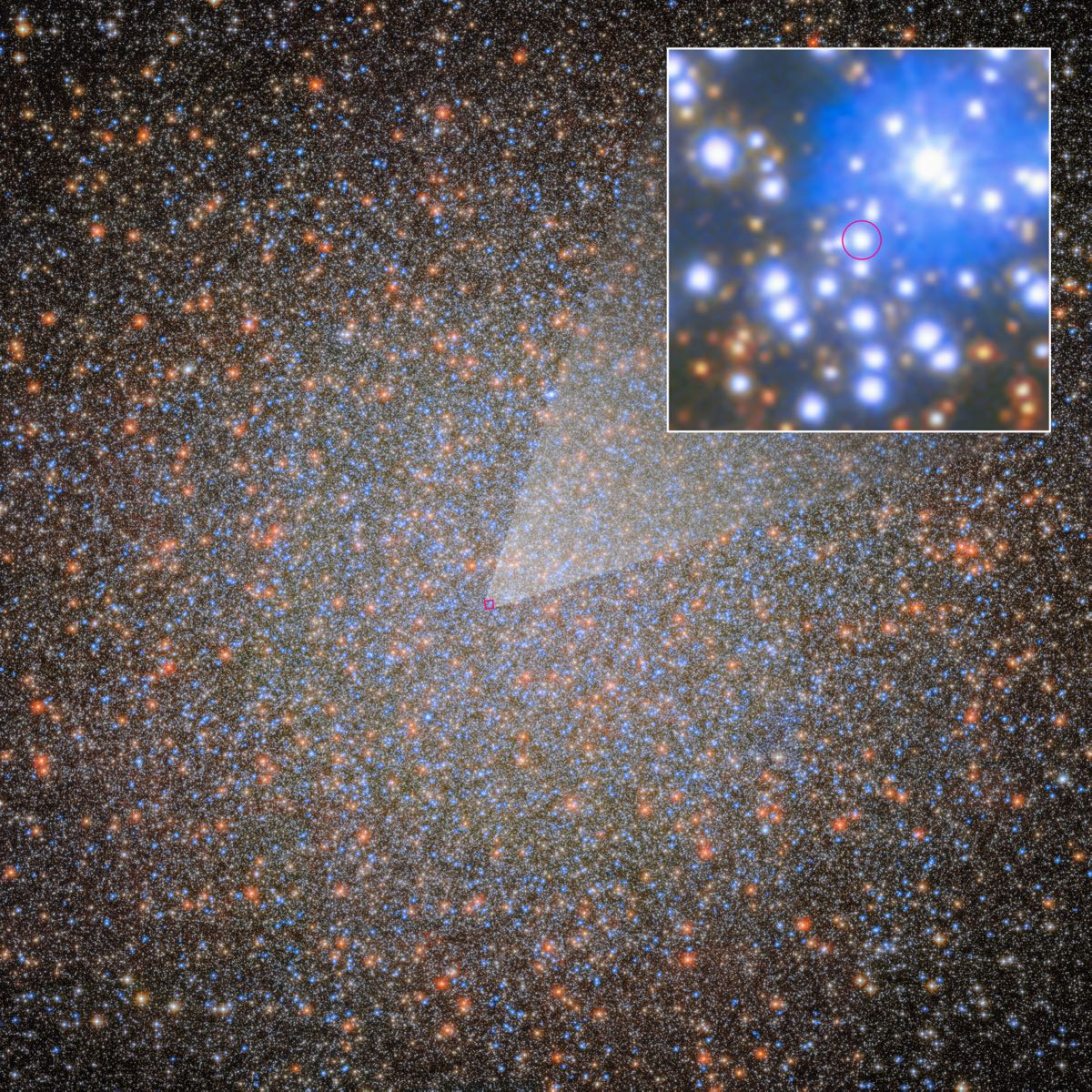
Quasars are key tracers of how black holes grew. The James Webb Space Telescope now finds actively feeding black holes within a few hundred million years of the Big Bang, such as the one in GN-z11. In July 2026, Euclid and the Keck Observatory reported 12 new quasars beyond redshift 7, setting a new distance record at 7.77. See also the puzzling little red dots.
Who wrote it
Maarten Schmidt, an astronomer at Caltech, wrote the paper alone. Caltech astronomy runs the Palomar Observatory. The paper has about 740 citations in Semantic Scholar as of October 2026.
Read the original
Schmidt, M. (1963). “3C 273: A Star-Like Object with Large Red-Shift.” Nature 197, 1040. doi:10.1038/1971040a0. The journal version requires a subscription.
This week in papers
Five new results in one line each, plus one landmark like this one. Weekly.
Keep reading
Kerr, Physical Review Letters, 11, 237, 1963
The Kerr Black Hole: The Exact Math of a Spinning Black Hole
Found in 1963 the exact solution of Einstein's equations for a spinning mass, describing real black holes by mass and spin alone. Roy Kerr's letter.
Penrose, Physical Review Letters, 14, 57-59, 1965
Penrose's Singularity Theorem: Why Black Holes Must Form
Proved in 1965 that once a trapped surface forms, collapse to a singularity is unavoidable in general relativity. Roger Penrose's Nobel-winning theorem.
Hawking, Nature, 248, 30-31, 1974
Hawking Radiation: How Black Holes Slowly Evaporate
Showed in 1974 that black holes glow faintly and evaporate, ending in a burst. Stephen Hawking's two-page Nature letter on Hawking radiation, explained.
Topic guide
Black holes
Recent news in black holes