The Fermi paradox
The Fermi paradox asks why we see no sign of alien civilizations in a galaxy full of planets. Where it came from, the main answers, what data can test.
By The Orbital Record editorial teamPublished Last reviewed
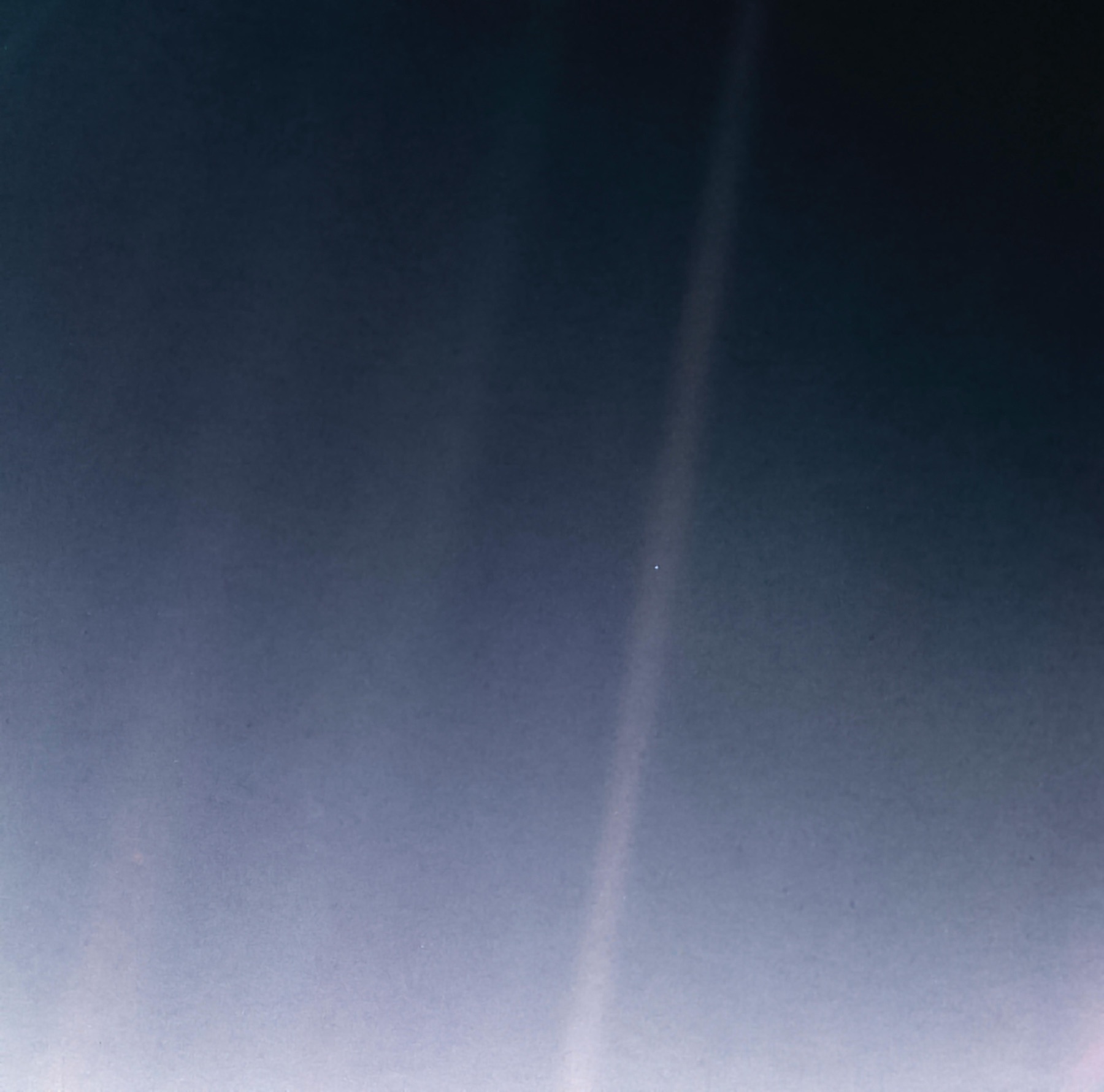
The Fermi paradox is the puzzle of why we see no evidence of alien civilizations even though the galaxy has billions of planets and billions of years in which life could have spread. It is named for Enrico Fermi, who asked “where is everybody?” in 1950. As of October 2026 there is still no confirmed sign of life beyond Earth, let alone intelligence.
The paradox sits at the center of the question “are we alone?”, which our astrobiology guide covers from the evidence side: Mars, the icy moons and exoplanet atmospheres.
Where the question came from
In the summer of 1950, over lunch at Los Alamos, Fermi and colleagues including Edward Teller, Emil Konopinski and Herbert York were joking about a spate of flying saucer reports. Fermi suddenly asked, in words usually remembered as “where is everybody?” His point, as attendees later recalled it, was that if technological civilizations are common and long-lived, some should have reached us by now.
Fermi never wrote it up. The argument was made rigorous in 1975 by astrophysicist Michael Hart, who argued that the absence of extraterrestrials on Earth is itself a fact needing explanation, and that the simplest explanation is that there are none in our galaxy.
The argument in four steps
- Planets are common. More than 6,000 exoplanets are confirmed, and surveys suggest most stars have planets, many of them rocky and some in habitable zones (exoplanets guide).
- There has been plenty of time. The Milky Way is about 13 billion years old. Earth formed about 4.6 billion years ago, so many planets are billions of years older than ours.
- Spreading is fast on cosmic timescales. Even at a few percent of light speed, a civilization could settle the galaxy in a few million to tens of millions of years.
- Yet we see nothing. No probes, no artifacts, no confirmed radio or laser signals, no engineered starlight.
The paradox is the clash between steps 1 to 3 and step 4.
The main proposed solutions
Proposed answers fall into three families: life is rare, civilizations are short-lived or quiet, or they are out there and we are not seeing them.
| Family | Example idea | What it predicts | Can we test it? |
|---|---|---|---|
| Life is rare | Rare Earth (Ward and Brownlee, 2000) | Simple life may be common, complex life very rare | Partly: search for simple life on Mars, Europa, exoplanets |
| A hard step is rare | The Great Filter (Robin Hanson, late 1990s) | Some step, such as the origin of life or of complex cells, almost never happens | Partly: finding independent life nearby would move the filter |
| Civilizations do not last | Self-destruction or collapse | Few civilizations exist at any one time | Indirectly, via the Drake equation’s lifetime term |
| They stay home or stay quiet | Expansion is costly, or they choose silence | Little interstellar travel or broadcasting | Hard, but deep technosignature searches can constrain it |
| They avoid us | The zoo hypothesis (John Ball, 1973) | Silence, by design | Essentially untestable |
| We have not looked enough | The search is still tiny | Signals exist below our limits | Yes: SETI sensitivity keeps improving |
“We have barely looked”
The most mundane answer may be the strongest. Radio searches began only in 1960, when Frank Drake pointed a telescope at two nearby stars in Project Ozma, following the 1959 proposal by Giuseppe Cocconi and Philip Morrison to listen near the 21-centimeter hydrogen line (Cocconi and Morrison 1959). Since then searches have covered only a minute fraction of the possible combinations of sky position, frequency, time and signal type. Breakthrough Listen, launched in 2015, is the largest such program so far.
“Life itself is rare”
We still have exactly one example of life, so we cannot measure how often it starts. Chemistry suggests the ingredients are easy: the 1953 Miller-Urey experiment made amino acids from simple gases and sparks (Miller 1953). But making ingredients is not the same as making a cell. A single discovery of independent life on Mars or Enceladus would show that life starts easily, and would push any Great Filter uncomfortably into our future.
The Drake equation: putting numbers on the silence
In 1961 Frank Drake wrote an equation for a meeting at Green Bank, West Virginia, to organize the question. The number of detectable civilizations in the galaxy equals the product of:
- the rate of star formation in the galaxy,
- the fraction of stars with planets,
- the number of habitable planets per system,
- the fraction of those where life arises,
- the fraction where intelligence evolves,
- the fraction that develop detectable technology,
- the length of time they remain detectable.
The first three terms are now measured or estimated from data. The last four are guesses spanning many orders of magnitude, which is why estimates range from “we are alone” to “millions of civilizations.” A 2018 analysis by Anders Sandberg, Eric Drexler and Toby Ord argued that once those uncertainties are taken seriously, there is a substantial probability that we are alone in the observable universe, so the silence need not be surprising.
What would change the picture
The paradox is not just philosophy. Specific observations would shift it:
- A second origin of life in the solar system. Perseverance’s “Cheyava Falls” rock holds a potential biosignature that only sample return could test (Hurowitz et al. 2025).
- Biosignature gases on exoplanets. The disputed K2-18b claim shows how hard this is (K2-18b).
- Technosignatures. Radio, laser or infrared signs of technology. In 2026 a Very Large Array and MeerKAT search of K2-18b for technosignatures found nothing.
- Interstellar visitors. Three interstellar objects have passed through the solar system since 2017, all natural. The most recent, comet 3I/ATLAS, prompted speculation it might be artificial; the observations show an ordinary, if ancient, comet.
Our take
The honest answer in 2026 is that we do not know whether the galaxy is empty, quiet or simply unsearched. What has changed is that parts of the question are becoming measurable: we now know planets are common, and telescopes like the James Webb Space Telescope and the coming Extremely Large Telescope can start testing the “life is rare” branch directly.
For a short animated overview, our video library includes Kurzgesagt’s “The Fermi Paradox: Where Are All The Aliens?”
Sources
- Jones, E. M. (1985). “Where is everybody?” An account of Fermi’s question. Los Alamos National Laboratory report LA-10311-MS. [history]
- Hart, M. H. (1975). An Explanation for the Absence of Extraterrestrials on Earth. Quarterly Journal of the Royal Astronomical Society 16, 128. [primary]
- Cocconi, G. and Morrison, P. (1959). Searching for Interstellar Communications. Nature 184, 844. https://doi.org/10.1038/184844a0 [primary]
- Sandberg, A., Drexler, E. and Ord, T. (2018). Dissolving the Fermi Paradox. https://arxiv.org/abs/1806.02404 [preprint]
- Ball, J. A. (1973). The zoo hypothesis. Icarus 19, 347. [primary]
Questions people ask
Who came up with the Fermi paradox?
It is named after the physicist Enrico Fermi, who asked colleagues at a lunch at Los Alamos in 1950 a question usually remembered as where is everybody. Fermi never published on it. The argument was developed in detail by Michael Hart in 1975, which is why it is sometimes called the Fermi-Hart paradox.
What is the Great Filter?
The Great Filter is the idea, proposed by economist Robin Hanson in the late 1990s, that some step between dead chemistry and a galaxy-spanning civilization is extremely unlikely. If the hard step lies in our past, such as the origin of life, we are rare. If it lies ahead of us, our own future is at risk.
Is the Fermi paradox a real paradox?
Not in the logical sense. It is a tension between two reasonable expectations: that intelligent life should be common given the number of planets, and that it should have spread or become visible by now. Either expectation could be wrong, and resolving which one is the scientific question.
What is the zoo hypothesis?
The zoo hypothesis, published by astronomer John Ball in 1973, suggests that advanced civilizations exist but deliberately avoid contact, leaving Earth alone the way a nature reserve is left undisturbed. It is hard to test, because it predicts exactly what we see: silence.
How long would it take to colonize the galaxy?
Estimates are usually a few million to a few tens of millions of years, even with ships much slower than light, because settlements could spread outward in waves. The Milky Way is about 13 billion years old, hundreds of times longer, which is why an empty galaxy needs an explanation.
Has SETI found anything?
No confirmed signal from an alien civilization has ever been found. The best-known candidate, the Wow! signal detected by Ohio State's Big Ear telescope in 1977, was never seen again. Modern searches such as Breakthrough Listen have scanned thousands of stars and found nothing artificial so far.