How old is the universe?
The universe is 13.8 billion years old (13.787 billion, Planck 2018). How it is measured two independent ways, and why the 26.7 billion claim fails.
By The Orbital Record editorial teamPublished Last reviewed
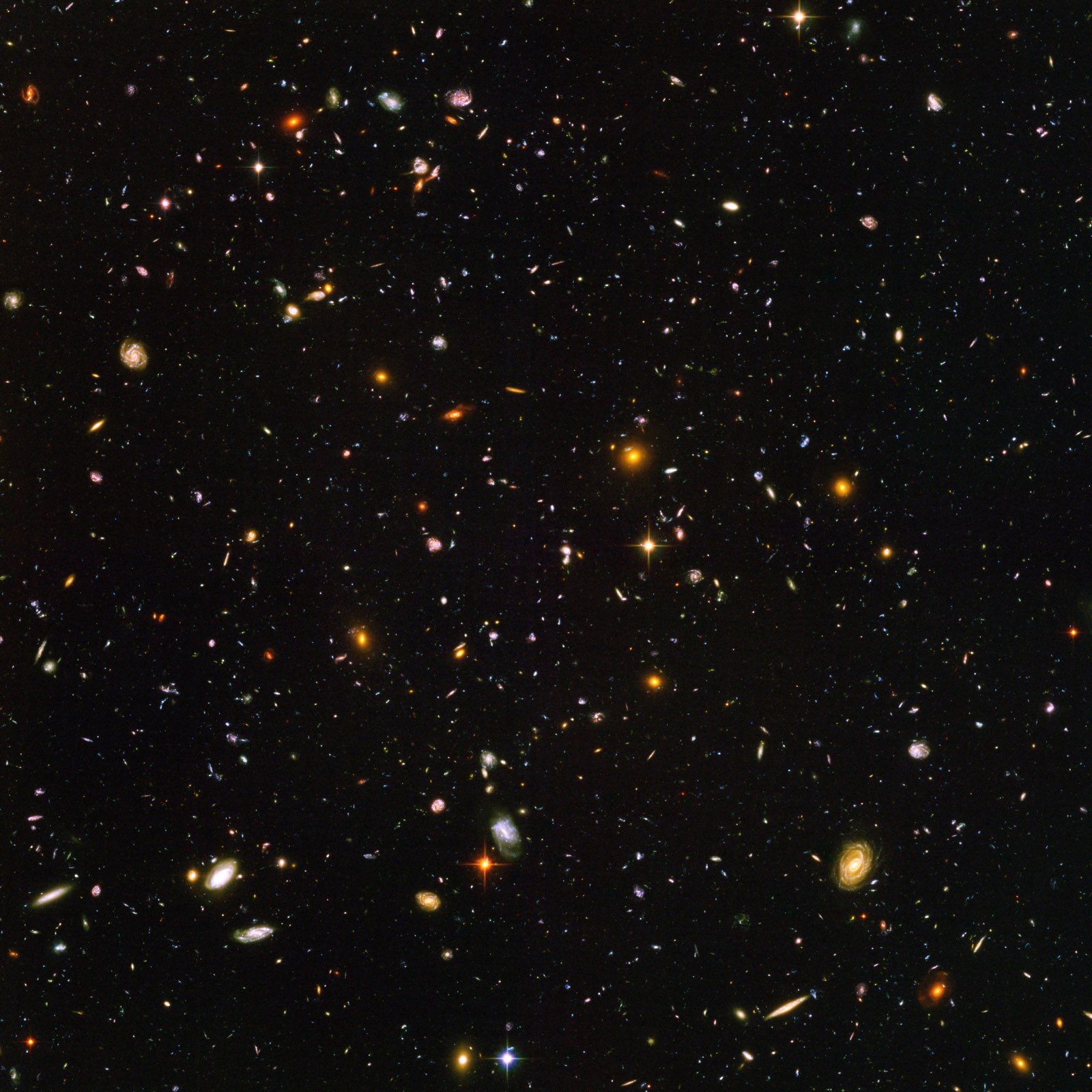
The age of the universe is about 13.8 billion years. The most precise value, 13.787 ± 0.020 billion years, comes from the Planck satellite’s 2018 analysis of the cosmic microwave background. The ages of the oldest stars give an independent check, and they agree: nothing we have found is older than the universe.
That number is one of the foundations of cosmology, and it is also one of the most misunderstood. Below: how it is measured, why two different values circulate, and why a widely shared claim of 26.7 billion years does not hold up.
How do we know the age of the universe?
Astronomers measure the age of the universe in two completely independent ways, and the agreement between them is what makes the number trustworthy.
Method 1: run the expansion backward
The universe is expanding. If you know how fast it expands today and what it contains (ordinary matter, dark matter, dark energy and radiation), Einstein’s equations tell you how the expansion rate has changed over time. Run that history backward and you reach the moment when everything was packed together. The time elapsed since then is the age.
The best inputs come from the cosmic microwave background, the light released about 380,000 years after the Big Bang. Its pattern of hot and cold spots encodes the universe’s ingredients with extraordinary precision. ESA’s Planck mission measured that pattern across the whole sky; its final parameter paper gives 13.787 ± 0.020 billion years (Planck 2018 cosmological parameters).
An important caveat: this is a model-dependent age. It assumes the standard Lambda-CDM model is right. If dark energy evolves, or if something unusual happened in the early universe, the number shifts.
Method 2: date the oldest stars
The second method ignores cosmology entirely. Stars evolve in predictable ways: the more massive they are, the faster they burn through their fuel. In a globular cluster, a dense ball of hundreds of thousands of stars born at the same time, you can see which stars have already left their stable phase. That turnoff point works like a clock.
In 2025 David Valcin, Raul Jimenez, Uroš Seljak and Licia Verde fitted the full color-brightness diagrams of globular clusters, using distances from ESA’s Gaia mission. They found the oldest clusters are 13.39 ± 0.10 (statistical) ± 0.23 (systematic) billion years old. Adding the time it took the first clusters to form gives an age of the universe of about 13.57 billion years, with an upper limit near 13.9 billion years. That is fully compatible with Planck.
| Method | Result | What it assumes |
|---|---|---|
| Cosmic microwave background (Planck 2018) | 13.787 ± 0.020 billion years | The standard Lambda-CDM model |
| Cosmic microwave background (WMAP 2003) | 13.7 ± 0.2 billion years | The same model, older data |
| Oldest globular clusters (Valcin et al. 2025) | Clusters 13.39 billion years; universe about 13.57 billion years | Stellar physics and Gaia distances |
Why some sources say 13.7 and others 13.8 billion years
Both numbers are legitimate, they just come from different missions. In 2003 the first-year results of NASA’s WMAP satellite gave 13.7 ± 0.2 billion years (WMAP first-year results), and that figure entered textbooks, museum panels and documentaries. Planck’s more sensitive maps moved it to 13.787 billion years, which rounds to 13.8.
The difference, about 90 million years, sits well inside WMAP’s own uncertainty. Nothing was overturned; the measurement got sharper.
Is the universe older than we thought? The 26.7 billion year claim
In July 2023 Rajendra Gupta of the University of Ottawa published a paper in Monthly Notices of the Royal Astronomical Society arguing that the universe could be 26.7 billion years old. His motivation was the bright, apparently mature galaxies the James Webb Space Telescope was finding very early in cosmic history. If those galaxies needed more time to grow, he reasoned, perhaps the universe is older.
To get there, the model makes two large changes at once:
- Part of the redshift is “tired light”. Instead of being entirely due to expansion, some of the reddening of distant light comes from photons losing energy on their way, an idea first floated by Fritz Zwicky.
- The constants of nature drift. Coupling constants that set the strength of physical forces change over cosmic time, an old speculation of Paul Dirac.
Why cosmologists do not accept it:
- Supernovae show time dilation. In an expanding universe, events far away should appear slowed down by a factor of (1 + redshift). A 2024 Dark Energy Survey study of 1,504 type Ia supernovae measured exactly that, with a precision of about 1%, ruling out cosmologies without time dilation at very high significance. Tired light does not produce this effect.
- It must explain everything else too. Lambda-CDM fits the cosmic microwave background, the abundances of hydrogen and helium, and baryon acoustic oscillations with the same handful of numbers. The 26.7-billion-year model has not been shown to reproduce that full set of observations.
- The motivating problem has shrunk. Spectroscopy has since shown that some of the most extreme early “galaxies” were growing black holes, the little red dots, and that others were less massive than first estimated.
The paper is peer reviewed and its author is a working physicist, so it is fair to report. But one paper with an unusual model is not a revision of the age of the universe.
Could the age still change?
Yes, by a few percent, and the reason is the Hubble tension. The age from the cosmic microwave background depends on the expansion rate built into the model, about 67.4 kilometers per second per megaparsec. Direct measurements with Cepheid stars and supernovae give about 73 (the SH0ES Hubble constant).
As a rough illustration: if you kept everything else in the model fixed and simply used 73, the age would drop from 13.8 to about 12.7 billion years. That would put the universe uncomfortably close to, or below, the ages of its oldest star clusters. This is one of the reasons cosmologists think the fix for the Hubble tension, if new physics is needed, must be subtler than a single number change.
Dark energy matters too. The Dark Energy Spectroscopic Instrument reported in 2025 that an evolving dark energy fits its data better than a constant one, at 2.8 to 4.2 sigma depending on the data used (DESI’s 2025 evolving dark energy result). If that holds, the expansion history changes slightly, and so does the age.
What does 13.8 billion years actually mean?
It is the time since the universe was hot and dense enough that the known laws of physics describe it, not the age of a thing that sat still. A few anchors:
- The cosmic microwave background was released about 380,000 years in.
- The earliest confirmed galaxy, MoM-z14, is seen 280 million years after the Big Bang.
- On the scale of the far future, 13.8 billion years is almost nothing. Stars will keep forming for about 100 trillion (1014) years, which is why the universe is still in its youth. Follow that timeline in Deep Time.
Questions people ask
How old is the universe?
The universe is about 13.8 billion years old. The most precise figure, 13.787 billion years with an uncertainty of about 20 million years, comes from the European Space Agency's Planck satellite, which measured the cosmic microwave background. Independent ages of the oldest star clusters agree with it.
How do we know the age of the universe?
Astronomers use two independent methods. One fits the standard cosmological model to the cosmic microwave background and runs the expansion backward to the start. The other dates the oldest stars from how they shine and evolve. Both give about 13.5 to 13.8 billion years, and the stars are never older than the universe.
How old is the universe, 13.7 or 13.8 billion years?
Both numbers come from real measurements. NASA's WMAP satellite gave 13.7 billion years in 2003, and many textbooks still use it. Planck's final 2018 analysis refined it to 13.787 billion years, which rounds to 13.8. The two values agree within WMAP's uncertainty of 200 million years.
Is the universe 26.7 billion years old?
No. A 2023 paper by Rajendra Gupta proposed 26.7 billion years by mixing expansion with 'tired light' and changing physical constants. It is not accepted: it has not been shown to reproduce the cosmic microwave background or light-element data, and supernova measurements confirm the time dilation that tired light lacks.
Can stars be older than the universe?
No real star can be, and none is. In the 1990s some star ages briefly exceeded estimates of the universe's age, but better distances and a better expansion model fixed the mismatch. A 2025 study puts the oldest globular clusters at about 13.4 billion years, slightly younger than the universe.
Does the Hubble tension change the age of the universe?
It could. The age depends on the expansion rate. If the true rate is near the distance-ladder value of 73 rather than 67, and nothing else in the model changes, the universe would come out roughly a billion years younger, close to the ages of the oldest stars. That is one reason the tension matters.
What is the oldest thing in the universe?
The oldest light we can see is the cosmic microwave background, released about 380,000 years after the Big Bang. The oldest confirmed galaxy, MoM-z14, is seen as it was 280 million years after the Big Bang. The oldest stars in our galaxy formed more than 13 billion years ago.