What came before the Big Bang?
Nobody knows what came before the Big Bang, or if 'before' means anything. The five serious scientific ideas, what each predicts, how to test them.
By The Orbital Record editorial teamPublished Last reviewed
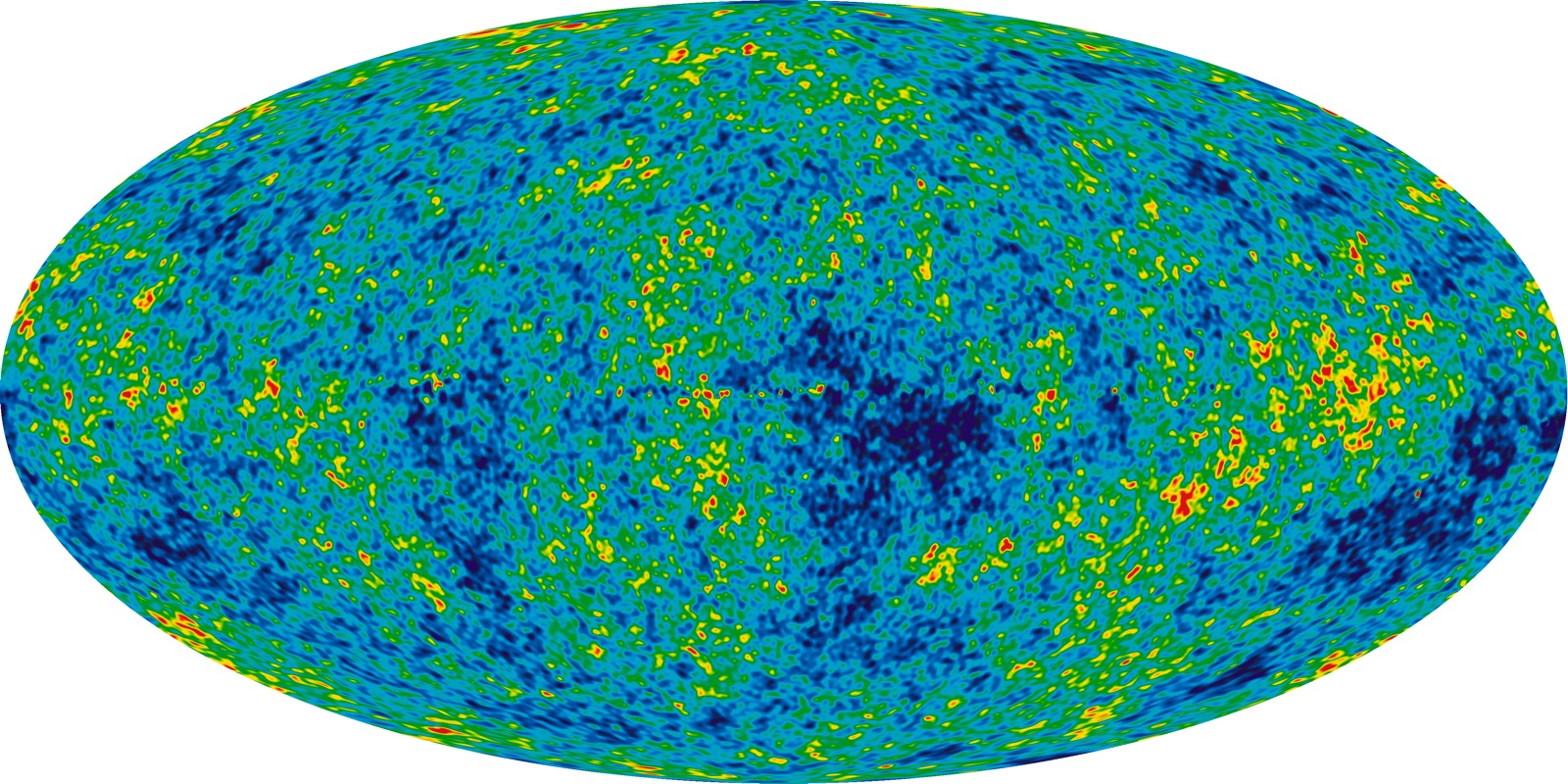
Nobody knows what came before the Big Bang, and it may not be a meaningful question. Our best theory of gravity breaks down at the very beginning, so it cannot see past it. Physicists have five serious proposals: time began there, eternal inflation, a bounce, cycles of universes, or colliding branes. None is confirmed yet.
This is one of the few places in cosmology where the honest answer is “we do not know”, and it is worth saying clearly, because many popular articles blur the line between established science and speculation.
Why is the question so hard?
The Big Bang theory describes how the universe evolved from a hot, dense state. It does not describe a moment of creation. Run Einstein’s equations backward and the density and temperature climb without limit until they become infinite at a “singularity”. That is not a physical answer; it is the equations announcing they no longer apply.
Roger Penrose proved in 1965 that, under general conditions, general relativity makes singularities unavoidable inside collapsing stars (Penrose’s singularity theorem). He and Stephen Hawking then extended the argument to the expanding universe: classical Big Bang models must begin at a singularity. To get past it, physics needs a quantum theory of gravity, and there is no complete, tested one.
There is also a practical wall. The oldest light we can see, the cosmic microwave background, was released about 380,000 years after the Big Bang. Earlier than that, the universe was opaque.
Does cosmic inflation answer it?
Partly. Cosmic inflation, proposed by Alan Guth in 1981 (Guth’s inflationary universe), says space expanded exponentially for a tiny fraction of a second, and the hot Big Bang began when that expansion ended. In this picture the hot Big Bang was not the very first event: inflation came “before” it.
Inflation fits the data well. It predicts nearly uniform ripples with a slight tilt, and Planck measured that tilt, the spectral index, at 0.965 ± 0.004 (Planck 2018 cosmological parameters).
But inflation only moves the question back. In 2003 Arvind Borde, Alan Guth and Alexander Vilenkin showed that an inflating spacetime cannot extend infinitely into the past (“Inflationary spacetimes are incomplete in past directions”, Physical Review Letters). Inflation needs a beginning of its own, or something else before it.
The five main ideas
Here are the serious proposals, what each says came “before”, and whether it can be tested:
| Idea | Key authors | What came before | Testable? |
|---|---|---|---|
| No-boundary universe | James Hartle and Stephen Hawking, 1983 | Nothing: time has no sharp beginning | Indirectly, through predictions for inflation |
| Eternal inflation | Andrei Linde, Alexander Vilenkin and others | An inflating space that never stops making new “bubble” universes | Hard; possible bubble-collision marks in the microwave background |
| Big Bounce (loop quantum cosmology) | Abhay Ashtekar, Tomasz Pawlowski, Parampreet Singh, 2006 | A contracting universe that rebounded | Possibly, via subtle features in the microwave background |
| Ekpyrotic and cyclic universe | Justin Khoury, Burt Ovrut, Paul Steinhardt, Neil Turok, 2001 to 2002 | Collisions of higher-dimensional “branes”, repeating in cycles | Yes: predicts essentially no primordial gravitational waves |
| Conformal cyclic cosmology | Roger Penrose | The far future of a previous “aeon” | Claimed circles in the microwave background; not confirmed |
1. Time began with the universe
In 1983 James Hartle and Stephen Hawking published “Wave function of the Universe” in Physical Review D. In their quantum description, near the beginning time behaves like a direction in space, so the universe has no boundary in time. Hawking liked to compare the question “what came before?” to asking what lies south of the South Pole. The question is not unanswered; it has no answer.
2. Eternal inflation
In many versions of inflation, the inflating state ends in some regions but continues in others, which keep expanding and spawning more regions. Our Big Bang would be the end of inflation in one patch, inside a much larger, perhaps endless, inflating space. This is one route to the idea of a “multiverse”. It is popular among theorists and very hard to test.
3. A Big Bounce
Loop quantum cosmology, an approach to quantum gravity, suggests that when matter is squeezed to near the Planck density, gravity turns repulsive. In 2006 Abhay Ashtekar, Tomasz Pawlowski and Parampreet Singh showed in a simplified model that the singularity is replaced by a bounce: a previous contracting universe rebounded into ours.
4. Colliding branes and cyclic universes
In 2001 Justin Khoury, Burt Ovrut, Paul Steinhardt and Neil Turok proposed the “ekpyrotic” universe, in which the hot Big Bang is the collision of two membrane-like worlds in a higher-dimensional space. Steinhardt and Turok extended it in 2002 into a cyclic model, published in Science, with endless rounds of expansion and collision. It makes a sharp prediction: almost no primordial gravitational waves.
5. Conformal cyclic cosmology
Roger Penrose proposes that the far future of one universe, when only radiation remains and scale loses meaning, becomes the Big Bang of the next. In 2010 he and Vahe Gurzadyan reported concentric circles in WMAP microwave maps as possible traces of the previous aeon. Independent teams searched the same data that year and found no significant signal, so the claim is not accepted.
How could we test any of this?
The most promising test is the faint twist that primordial gravitational waves would leave in the polarization of the cosmic microwave background:
- Most inflation models predict gravitational waves at some level. BICEP/Keck set the tightest limit in 2021: a tensor-to-scalar ratio below 0.036.
- Ekpyrotic and cyclic models predict essentially none.
- A detection would strongly favor inflation; continued silence would squeeze many simple inflation models and keep the alternatives alive.
Experiments at the South Pole and in Chile are pushing these limits down, and gravitational-wave detectors in space such as LISA may one day probe the early universe directly.
The bottom line
The Big Bang, as a hot and dense early state, is one of the best-tested ideas in science. What came before it is not. Treat any confident answer you read, including “there was nothing”, as an opinion about physics we do not have yet. The early chapters of the universe’s story, and its long future, are laid out in our Deep Time explorer.
Questions people ask
What was before the Big Bang?
Nobody knows. General relativity, the theory that describes the expanding universe, breaks down when run back to the very beginning, so it cannot say what came before. Scientists have several proposals, from time itself beginning at the Big Bang to a bounce from an earlier universe, but none has observational support yet.
Did time begin at the Big Bang?
Possibly. In classical general relativity, time and space both start at the initial singularity, so there is no 'before'. Stephen Hawking and James Hartle's 1983 no-boundary proposal keeps that idea in a quantum form. Other models, such as bouncing or cyclic universes, let time extend back further. The question is open.
What caused the Big Bang?
There is no accepted cause. In the most popular picture, cosmic inflation, a brief burst of exponential expansion set up the hot Big Bang, but inflation itself needs a starting point. Asking what caused the whole thing may require a theory of quantum gravity that physicists do not have yet.
Was there a universe before ours?
Some serious models say yes. Bouncing cosmologies propose that a previous universe contracted and rebounded, and Roger Penrose's conformal cyclic cosmology proposes an endless chain of universes. These are testable in principle through the cosmic microwave background, but no confirmed signal of an earlier universe has been found.
Can we ever see before the Big Bang?
Not with light. The cosmic microwave background, released 380,000 years after the Big Bang, is a wall we cannot see behind with telescopes. Gravitational waves and neutrinos could reach further back, and patterns in the microwave background may preserve indirect clues about the very earliest moments.
What is the no-boundary proposal?
The no-boundary proposal, published by James Hartle and Stephen Hawking in 1983, describes the universe with a quantum wave function in which time behaves like a direction of space near the beginning. The result has no sharp starting edge: asking what came before is like asking what is south of the South Pole.