What is the fourth dimension?
In physics the fourth dimension is time, joined to space in relativity's spacetime. Extra spatial dimensions are a hypothesis no test has confirmed.
By The Orbital Record editorial teamPublished Last reviewed
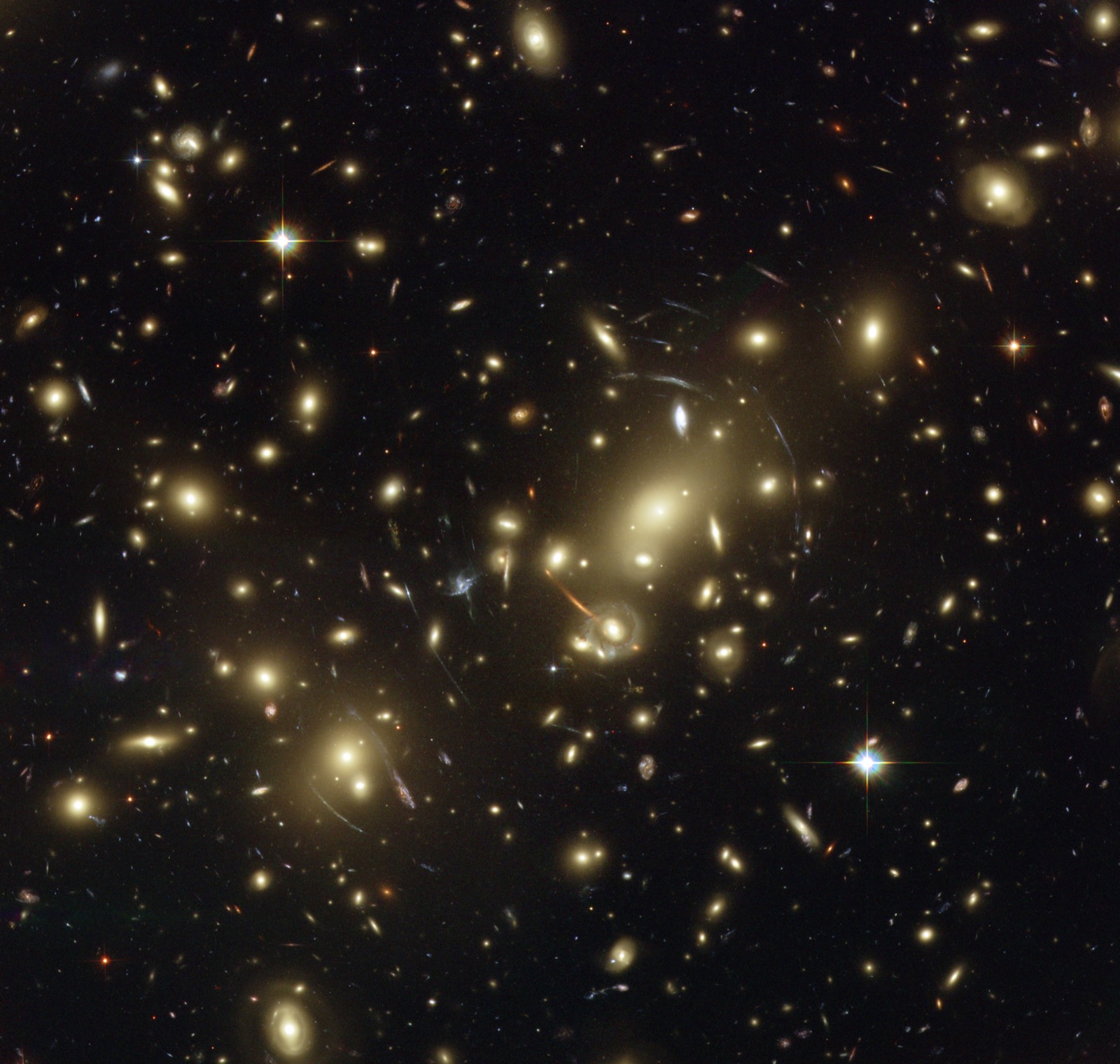
The fourth dimension, in physics, is time. Since 1908, relativity has described the universe as a four-dimensional spacetime: three dimensions of space and one of time, woven together. That part is established physics. A fourth dimension of space, or any extra dimension beyond those four, is a hypothesis, and every experiment so far has found none.
The phrase means different things in different places, so this guide separates three ideas: time as the fourth dimension (established), extra spatial dimensions (hypothetical, and tightly limited), and four-dimensional physics simulated in the laboratory (real experiments, but not a doorway to another dimension).
Is time the fourth dimension?
Yes. In relativity, time is the fourth dimension of spacetime. The idea was made precise by the mathematician Hermann Minkowski in a lecture in Cologne on 21 September 1908, published in 1909 as “Space and Time”. Minkowski showed that Einstein’s special relativity becomes simple if you stop treating space and time as separate and think of a single four-dimensional world of events.
Why four? To say where and when something happens, you need four numbers: three for position and one for time. Observers moving relative to each other disagree on distances and durations, but they agree on the four-dimensional geometry that links events. Minkowski’s opening line put it memorably: space by itself and time by itself would “sink fully into shadows”, with only their union surviving.
Time is not just a fourth direction like the others. One sign in the geometry of spacetime differs, which separates events that can influence each other from events that cannot, and which lets you turn around in space but not in time.
Einstein then made spacetime dynamic. In general relativity, completed in 1915, mass and energy curve four-dimensional spacetime, and gravity is that curvature. The arcs in the image above, light bent around the galaxy cluster Abell 2218, are one visible result. Everything in modern cosmology, from the expanding universe to black holes and gravitational waves, is written in this language.
What would a fourth dimension of space be?
A fourth dimension of space would be a new direction at right angles to length, width and height. Mathematicians handle it easily: a four-dimensional cube, or tesseract, has 16 corners, just as a cube has 8 and a square 4. We cannot picture it, for the same reason a creature living on a flat sheet could not picture “up”.
Physics asks a different question: is there such a direction in nature? If there were, and it were large and open, gravity would spread into it and weaken faster with distance than Newton’s law says. It does not, at least over the distances we can test. So any extra spatial dimension must be hidden. Physicists have proposed two main ways to hide one.
Are there extra dimensions? The history of an idea
The modern story starts with Theodor Kaluza. In a 1921 paper, presented to the Prussian Academy by Einstein, Kaluza wrote general relativity in five dimensions and found that the extra pieces of the equations reproduce Maxwell’s equations of electromagnetism. Gravity and light would be one geometry.
In 1926 Oskar Klein curled the fifth dimension into a tiny circle and linked its size to the electron’s charge, giving a circumference of about 0.8 × 10⁻³⁰ centimeters. This is compactification, the first way to hide a dimension: make it too small to notice. Every particle that can move around such a circle appears to us as a ladder of heavier copies, the Kaluza-Klein tower.
The idea returned in the late 1990s, when physicists noticed that extra dimensions might explain why gravity is so much weaker than the other forces:
| Proposal | Year | What it says | Status |
|---|---|---|---|
| Kaluza | 1921 | A fifth dimension unites gravity and electromagnetism | Hypothesis; not detected |
| Klein | 1926 | The fifth dimension is a circle about 10-30 cm around | Far below any experiment’s reach |
| Arkani-Hamed, Dimopoulos, Dvali (ADD) | 1998 | Two or more extra dimensions, possibly up to a millimeter; gravity leaks into them | Tightly constrained, not ruled out |
| Randall-Sundrum | 1999 | One small, strongly curved (“warped”) extra dimension | No heavy gravitons seen at the LHC so far |
| Dark dimension | 2023 | One extra dimension of about 0.1 to 10 micrometers, tied to dark energy | Just below current tests |
ADD introduced the second way to hide a dimension: let our particles be stuck to a four-dimensional “membrane” while only gravity spreads into the extra space. Then the extra dimensions can be surprisingly large, because only gravity, the weakest force, would notice them.
String theory, the leading candidate for a quantum theory of gravity, needs extra dimensions to be mathematically consistent. But string theory has not been tested experimentally, so its dimensions are not evidence either.
How do scientists test for extra dimensions?
Physicists test for extra dimensions in three independent ways, and all three come up empty so far.
Tabletop gravity
If gravity leaks into extra dimensions smaller than a millimeter, it should grow stronger than Newton’s 1/r2 law at very short distances. The Eöt-Wash group at the University of Washington measures this with torsion balances, pendulums twisted by the pull of nearby test masses. In 2007, Kapner and colleagues found the law holds down to 56 micrometers (Phys. Rev. Lett. 98, 021101). In 2020, Lee and colleagues reached 52 micrometers and concluded that the largest extra dimension must have a radius below 30 micrometers.
Particle colliders
At the Large Hadron Collider, a graviton escaping into extra dimensions would leave a collision lopsided: one spray of particles and nothing visible to balance it. The ATLAS monojet search of 2021, using all data from 2015 to 2018, found no excess. For the ADD model, the fundamental scale of gravity must be above 11.2 TeV with two extra dimensions and above 5.9 TeV with six.
Gravitational waves
Large, open extra dimensions would drain energy from gravitational waves as they cross the universe. In 2017, the neutron star merger GW170817 gave both a gravitational-wave distance and a distance from its host galaxy’s light. In 2018, Pardo, Fishbach, Holz and Spergel compared them and found that the waves travel through 4.02 (+0.07, -0.10) spacetime dimensions, matching general relativity. This test does not apply to small, curled-up dimensions, which the first two methods cover.
| Test | Best limit | What it rules out |
|---|---|---|
| Torsion balance (Lee et al. 2020) | Newton’s law holds down to 52 micrometers | Any extra dimension gravity feels larger than 30 micrometers in radius |
| LHC (ATLAS 2021) | Gravity scale above 11.2 TeV (two extra dimensions) | The simplest ADD models with gravity strong near 1 TeV |
| GW170817 (Pardo et al. 2018) | D = 4.02 (+0.07, -0.10) | Gravitational waves leaking into large, open extra dimensions |
Have scientists created a fourth dimension in the lab?
Not literally, but they have simulated four-dimensional physics. In January 2018, two papers in Nature reported experiments that reproduce the behavior of a four-dimensional quantum Hall system, a kind of material that exists in theory only in four spatial dimensions. One team, with Michael Lohse as first author and Immanuel Bloch among the authors, used ultracold atoms in an angled lattice made of laser light (Nature 553, 55). The other, with Oded Zilberberg as first author and Mikael Rechtsman among the authors, used light guided through a two-dimensional array of coupled optical waveguides (Nature 553, 59).
The trick is to use a slowly changing control setting as a stand-in for the missing directions. The experiments measured signatures of four-dimensional topology, but nothing in them moved through a real fourth spatial dimension. They are powerful tools for condensed matter physics, not evidence that extra dimensions exist.
What the news says now
Extra dimensions remain an active topic in theory. In July 2026 a University of Sheffield paper in Physical Review D proposed that the shape of a hidden fifth dimension could tune dark matter into a resonance with a dark photon. Like the dark dimension, it is a theory with predictions to test, not a detection. For what dark matter does and does not do, see our dark matter guide; for the dark energy that motivates the dark dimension, see our dark energy guide.
The bottom line
- Spacetime is four-dimensional. Three of space plus one of time, as Minkowski and Einstein showed. Every test of relativity confirms it.
- Extra dimensions are a hypothesis. They are well motivated by attempts to unify gravity with the other forces, but no experiment has found one.
- The hiding places are shrinking. A curled-up dimension gravity can feel must be smaller than 30 micrometers; large open ones would have shown up in gravitational waves.
- The next tests are micrometers away. Proposals such as the dark dimension predict effects just below the reach of today’s best torsion balances.
For the large-scale shape of the four dimensions we do live in, read is the universe infinite?.
Questions people ask
What is the fourth dimension?
In physics, the fourth dimension is time. Since Hermann Minkowski's 1908 lecture, relativity treats the three dimensions of space and one of time as a single four-dimensional spacetime. In mathematics, a fourth dimension can also mean a fourth direction of space, which we cannot see and which has never been detected.
Is time the fourth dimension?
Yes, in relativity. Locating any event takes four numbers, three for place and one for time, and observers moving relative to each other mix space and time differently. Time is not quite like the others, though: a sign in the geometry differs, which is why you can turn around in space but cannot go back in time.
Are there extra dimensions?
Nobody knows. String theory and several models of gravity predict them, but no experiment has found one. Tabletop gravity tests show that any curled-up extra dimension gravity can feel is smaller than about 30 micrometers, and the Large Hadron Collider has seen no particles escaping into extra dimensions.
How many dimensions are there?
We observe four: three of space and one of time. Gravitational waves from the 2017 neutron star merger GW170817 confirmed that gravity spreads through about four spacetime dimensions over cosmic distances. Theories such as string theory propose more, hidden at tiny scales, but they remain untested.
Can we see the fourth dimension?
Not a fourth dimension of space: our senses and instruments work in three. We experience time, the fourth dimension of spacetime, as change. Physicists have simulated four-dimensional physics in the lab, for example with ultracold atoms and light in 2018, but those experiments mimic a fourth dimension rather than reach into one.
What is the fifth dimension in physics?
It is a proposed extra dimension beyond the four of spacetime. Theodor Kaluza introduced it in 1921 to unite gravity and electromagnetism, and Oskar Klein suggested in 1926 that it is curled into a tiny circle. Modern versions include warped and micrometer-sized extra dimensions. None has been detected.