University, founded 1891
California Institute of Technology (Caltech) Astronomy
Caltech astronomy runs Palomar, co-operates LIGO and leads NASA's SPHEREx. It is building the 1,650-dish Deep Synoptic Array, due in 2029.
- Location
- Pasadena, California
- Focus
- Stars, Black holes, Gravitational waves, Exoplanets, Cosmology, Telescopes and missions
- Coordinates
- 34.138, -118.125
The California Institute of Technology (Caltech), founded in 1891 in Pasadena, runs major observatories and manages NASA’s Jet Propulsion Laboratory. Its astronomy department lists the Owens Valley Radio Observatory, Palomar Observatory, the W. M. Keck Observatory and LIGO among its facilities.
Flagship instruments and projects
- Palomar Observatory: the 200-inch Hale Telescope was the world’s largest from 1949 to 1975; the 48-inch Samuel Oschin telescope hosts the Zwicky Transient Facility.
- LIGO: conceived, built and operated by Caltech and MIT (see LIGO-Virgo-KAGRA).
- SPHEREx: NASA’s all-sky infrared survey, led by Caltech’s James Bock.
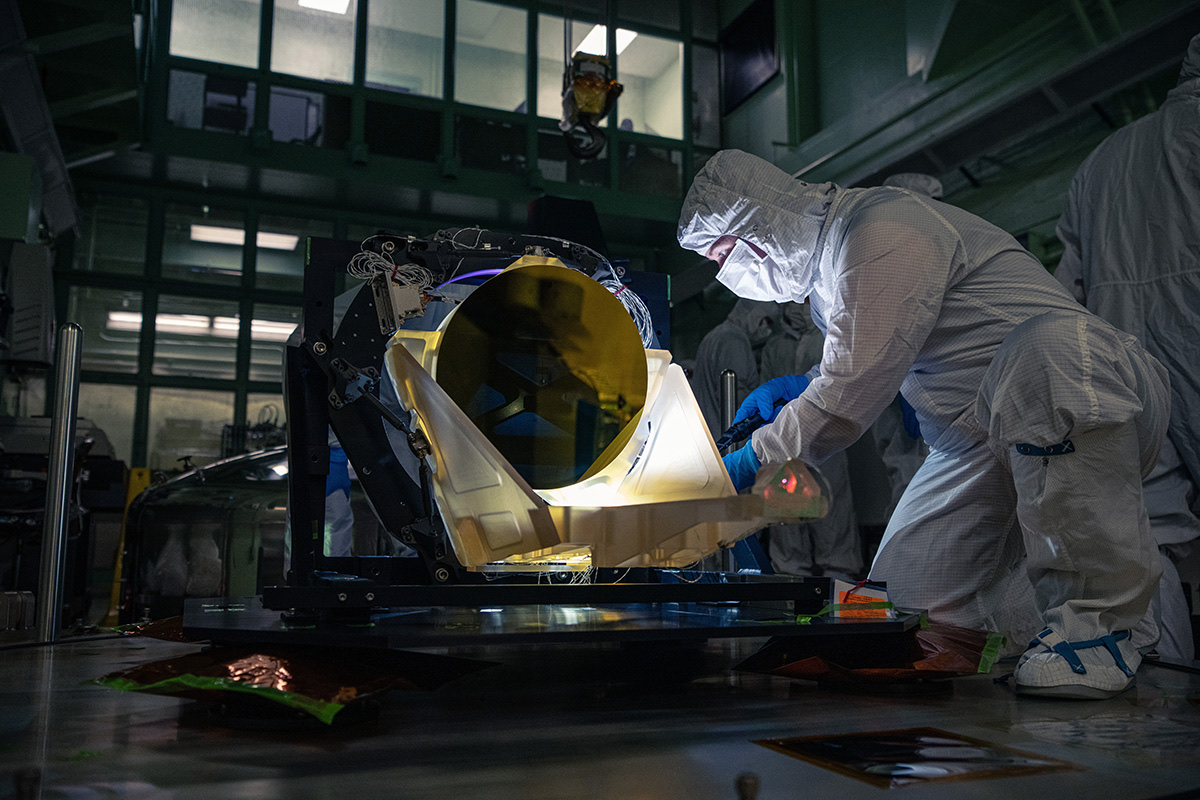
- IPAC: Caltech’s science center, which commanded the first Coronagraph observation of the Roman Space Telescope (reported October 2, 2026).
- Keck Observatory: listed among the department’s observatories.
Recent results
Caltech’s history includes Maarten Schmidt’s 1963 identification of the first quasar, 3C 273, and LIGO’s first direct detection of gravitational waves. In 2026 a Caltech/IPAC-led team used SPHEREx to find water, methane and carbon gases in dozens of brown dwarfs, and Caltech’s Jim Fuller co-authored a study showing that uneven mass loss as the Sun dies could break up the outer Solar System.
What to watch, 2026-2030
- 2029: target completion of the Deep Synoptic Array, 1,650 radio dishes in a Nevada valley funded by Schmidt Sciences. Its principal investigator says it could match the roughly 20 million radio sources found to date on its first day.
Why scientists are converging here
Radio astronomy is entering a building boom, from the SKA Observatory to the Deep Synoptic Array, and Caltech is building one of the most ambitious pieces itself. Combined with LIGO, SPHEREx and JPL, that gives Caltech researchers access to gravitational-wave, infrared and radio data at once.